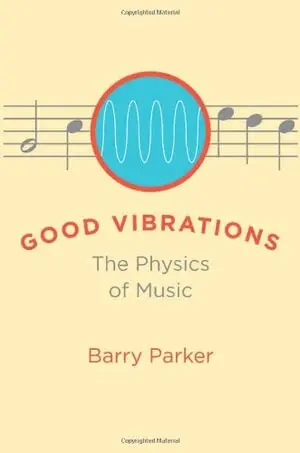
Good Vibrations
- Vikt 0,54 kg
369 krhos Akademibokhandeln · exkl. frakt
35 kr skillnad mellan billigaste och dyraste butik i lager
Dubbelkollat idag
Jämför 2 butiker
- Akademibokhandeln, 369 kr, frakt enligt butiken. Till butik (öppnas i ny flik)
I lagerFrakt: se butikenDubbelkollad 08:53
369 kr
Lägst
- Bokus, 404 kr, frakt enligt butiken. Till butik (öppnas i ny flik)
I lagerFrakt: se butikenDubbelkollad 08:51
404 kr

Priser från butikernas flöden kan ha ändrats: det är priset hos butiken som gäller, så kontrollera det innan du handlar.
Prishistorik
Köp nu eller vänta?
Just nu kostar produkten 369 kr — 47 kr över det lägsta vi sett på 1 månad.
Pris idag
369 kr
- Lägst
- 322 kr
- Snitt
- 328 kr
- Högst
- 369 kr
| 2026-09-15 | 322 kr · Lägst hos Bokus |
|---|---|
| 2026-10-27 | 369 kr · Lägst hos Akademibokhandeln |
Om produkten
Why does a harpsichord sound different from a piano?
Läs merLäs mindre
For that matter, why does middle C on a piano differ from middle C on a tuning fork, a trombone, or a flute? Good Vibrations explains in clear, friendly language the out-of-sight physics responsible not only for these differences but also for the whole range of noises we call music. The physical properties and history of sound are fascinating to study. Barry Parker's tour of the physics of music details the science of how instruments, the acoustics of rooms, electronics, and humans create and alter the varied sounds we hear. Using physics as a base, Parker discusses the history of music, how sounds are made and perceived, and the various effects of acting on sounds. In the process, he demonstrates what acoustics can teach us about quantum theory and explains the relationship between harmonics and the theory of waves. Peppered throughout with anecdotes and examples illustrating key concepts, this invitingly written book provides a firm grounding in the actual and theoretical physics of music.
Specifikationer
Fakta
- Vikt
- 0,54 kg
- GTIN
- 09780801892646
Uppgifter från tillverkare och butiker.