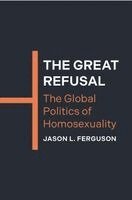
Great Refusal
1 767 krhos Bokus · exkl. frakt
532 kr skillnad mellan billigaste och dyraste butik i lager
Dubbelkollat idag
Jämför 2 butiker
- Bokus, 1 767 kr, frakt enligt butiken. Till butik (öppnas i ny flik)
I lagerFrakt: se butikenDubbelkollad 18:51
1 767 kr
Lägst
- Akademibokhandeln, 2 299 kr, frakt enligt butiken. Till butik (öppnas i ny flik)
I lagerFrakt: se butikenDubbelkollad 17:53
2 299 kr

Priser från butikernas flöden kan ha ändrats: det är priset hos butiken som gäller, så kontrollera det innan du handlar.
Prishistorik
Köp nu eller vänta?
Pris idag
1 767 kr
- Lägst
- 959 kr
- Snitt
- 1 554 kr
- Högst
- 1 767 kr
| 2026-10-07 | 1 249 kr · Lägst hos Akademibokhandeln |
|---|---|
| 2026-10-08 | 959 kr · Lägst hos Bokus |
| 2026-10-10 | 1 767 kr · Lägst hos Bokus |
Om produkten
Great Refusal
Läs merLäs mindre
What happens when the West interferes in the sexual politics of postcolonial Global South nationsSince the end of the Cold War, many Western nations have increasingly sought to integrate gay rights into their diplomacy, foreign policy, and international development programs. In The Great Refusal, Jason Ferguson examines what happens when pro-gay Western forces intervene in the sexual politics of countries around the world, especially in the postcolonial Global South. He finds that these interventions have unintended consequences, as the global clashes with the local. They create tension and divide nation-states from within, undermine local democratic structures and the collective conscience, and, paradoxically, fan the flames of resentment against the West, against gay rights, and against gay people.Ferguson's mixed-method and multiscalar account of what he terms the "geopoliticization of homosexuality and gay rights" offers an in-depth analysis of a single case: Senegal, where attempted global intervention exacerbated the very problem it meant to solve. Drawing on a wide range of data, including ethnographies, archival materials, and literature, and moving among global, national, and subnational levels, Ferguson demonstrates how such uninvited interventions ultimately turn homosexuality into a vector through which local populations express their broader resentments against the West. Global interventionism, he argues, has turned same-sex loving people into scapegoats of the twenty-first century.