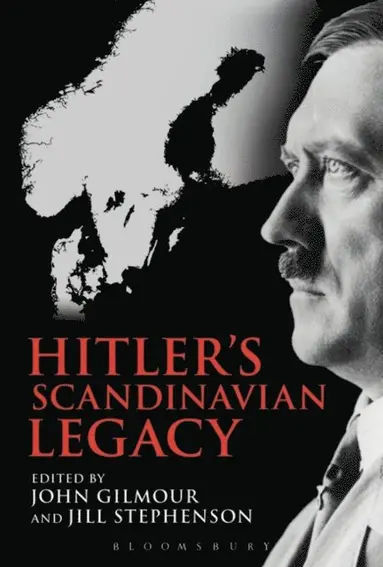
Hitler's Scandinavian Legacy
Dubbelkollat idag
Jämför 1 butik
- Bokus, 450 kr, frakt enligt butiken. Till butik (öppnas i ny flik)
I lagerFrakt: se butikenDubbelkollad 06:51
450 kr
Lägst

Priser från butikernas flöden kan ha ändrats: det är priset hos butiken som gäller, så kontrollera det innan du handlar.
Prishistorik
Köp nu eller vänta?
Just nu kostar produkten 450 kr — 10 kr över det lägsta vi sett på 1 månad.
Under den tiden har det oftast legat runt 450–460 kr.
Pris idag
450 kr
- Lägst
- 440 kr
- Snitt
- 456 kr
- Högst
- 463 kr
| 2026-09-15 | 458 kr · Lägst hos Bokus |
|---|---|
| 2026-09-17 | 440 kr · Lägst hos Bokus |
| 2026-09-19 | 463 kr · Lägst hos Bokus |
| 2026-09-27 | 440 kr · Lägst hos Bokus |
| 2026-09-30 | 463 kr · Lägst hos Bokus |
| 2026-10-10 | 440 kr · Lägst hos Bokus |
| 2026-10-12 | 463 kr · Lägst hos Bokus |
| 2026-10-15 | 450 kr · Lägst hos Bokus |
| 2026-10-21 | 463 kr · Lägst hos Bokus |
| 2026-10-26 | 450 kr · Lägst hos Bokus |
Om produkten
Hitler's Scandinavian Legacy
Läs merLäs mindre
The Scandinavian [Nordic] countries of Denmark, Norway, Sweden, and Finland experienced the effects of the German invasion in April 1940 in very different ways. Collaboration, resistance, and co-belligerency were only some of the short-term consequences. Each country's historiography has undergone enormous changes in the seventy years since the invasion, and this collection by leading historians examines the immediate effects of Hitler's aggression as well as the long-term legacies for each country's self-image and national identity.The Scandinavian countries' war experience fundamentally changed how each nation functioned in the post-war world by altering political structures, the dynamics of their societies, the inter-relationships between the countries and the popular view of the wartime political and social responses to totalitarian threats.Hitler was no respecter of the rights of the Scandinavian nations but he and his associates dealt surprisingly differently with each of them. In the post-war period, this has caused problems of interpretation for political and cultural historians alike. Drawing on the latest research, this volume will be a welcome addition to the comparative histories of Scandinavia and the Second World War.