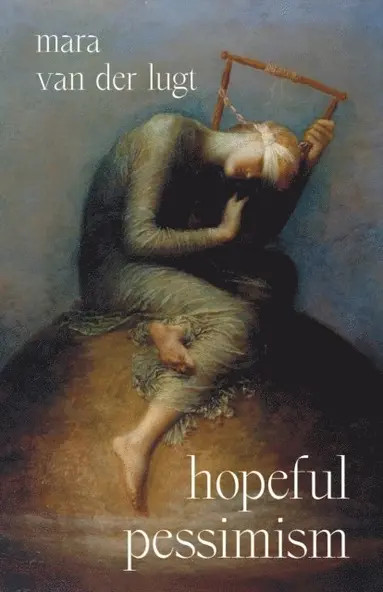
Hopeful Pessimism
Dubbelkollat idag
Jämför 1 butik
- Bokus, 257 kr, frakt enligt butiken. Till butik (öppnas i ny flik)
I lagerFrakt: se butikenDubbelkollad 02:51
257 kr
Lägst

Priser från butikernas flöden kan ha ändrats: det är priset hos butiken som gäller, så kontrollera det innan du handlar.
Prishistorik
Köp nu eller vänta?
Just nu kostar produkten 257 kr — 6 kr över det lägsta vi sett på 1 månad.
Pris idag
257 kr
- Lägst
- 251 kr
- Snitt
- 254 kr
- Högst
- 257 kr
| 2026-09-15 | 251 kr · Lägst hos Bokus |
|---|---|
| 2026-10-06 | 257 kr · Lägst hos Bokus |
Om produkten
Hopeful Pessimism
Läs merLäs mindre
Why "hopeful pessimism" is not a contradiction in terms but a powerful source of moral and political commitmentThe climate debate is rife with calls for optimism. While temperatures rise and disasters intensify, we are asked to maintain optimism and hope, as if the real threat is pessimism and despair. In this erudite and engaging book, Mara van der Lugt argues that this is a mistake: crude optimism can no longer be a virtue in a breaking world, and may well prove to be our besetting vice. In an age of climate change and ecological devastation, the virtue we need is hopeful pessimism.Drawing on thinkers that range from J.R.R.Tolkien and Mary Shelley to Albert Camus and Jonathan Lear, van der Lugt invites us to rethink what we thought we knew about optimism and pessimism, hope and despair, activism and grief. She shows that pessimism is closely linked to a tradition of moral and political activism, and offers a different way to think about pessimism: not as synonymous with despair but as compatible with hope. Gently yet fiercely, van der Lugt argues that what we need to avoid is not pessimism but fatalism or self-serving resignation. Pessimism does not imply the loss of courage or the lack of a desire to strive for a better world; on the contrary, these are the very gifts that pessimism can bestow.What Hopeful Pessimism asks instead is that we strive for change without certainties, without expecting anything from our efforts other than the knowledge that we have done what we are called upon to do as moral agents in a time of change.