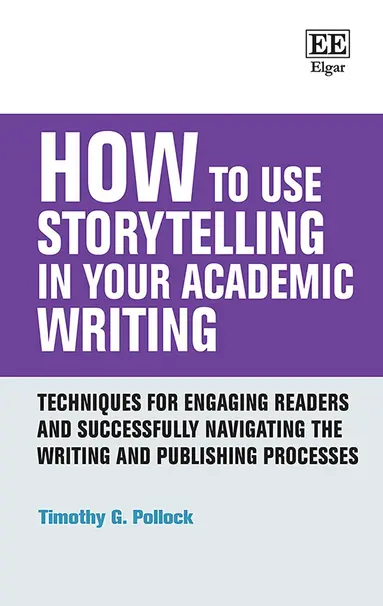
How to Use Storytelling in Your Academic Writing
Dubbelkollat idag
Jämför 2 butiker
- Bokus, 541 kr, frakt enligt butiken. Till butik (öppnas i ny flik)
Slut i lagerFrakt: se butikenDubbelkollad 08:51
541 kr
- Akademibokhandeln, 699 kr, frakt enligt butiken. Till butik (öppnas i ny flik)
Slut i lagerFrakt: se butikenDubbelkollad 08:53
699 kr

Priser från butikernas flöden kan ha ändrats: det är priset hos butiken som gäller, så kontrollera det innan du handlar.
Prishistorik
Köp nu eller vänta?
- Lägst
- 529 kr
- Snitt
- 545 kr
- Högst
- 699 kr
| 2026-09-15 | 529 kr · Lägst hos Bokus |
|---|---|
| 2026-10-09 | 541 kr · Lägst hos Bokus |
| 2026-10-28 | 699 kr · Lägst hos Akademibokhandeln |
| 2026-10-31 | Ingen butik hade produkten i lager |
Om produkten
Good writing skills and habits are critical for scholarly success
Läs merLäs mindre
Every article is a story, and employing the techniques of effective storytelling enhances scholars' abilities to share their insights and ideas, increasing the impact of their research. This book draws on the tools and techniques of storytelling employed in fiction and non-fiction writing to help academic writers enhance the clarity, presentation, and flow of their scholarly work.Timothy Pollock describes the structure, techniques and tools of storytelling, and shows the reader how to apply them in writing the Introduction, Theory and Hypotheses, Methods and Results, and Discussion sections of an article. He also describes how these sections differ for qualitative and theory papers, and addresses how to manage the writing, coauthoring and review processes. In addition, he explains how to use storytelling when writing grant proposals, research statements and cover letters.This book is an invaluable tool for academics at all levels across the business and social science disciplines.'If you want your scholarly work to be read, admired, and remembered, you should dive into this book. Tim Pollock has done us an immense service. By integrating classical concepts from the narrative and dramatic arts, along with numerous juicy examples from the world of academic writing, Pollock provides us a fun, valuable story about storytelling.'- Donald C. Hambrick, The Pennsylvania State University, US