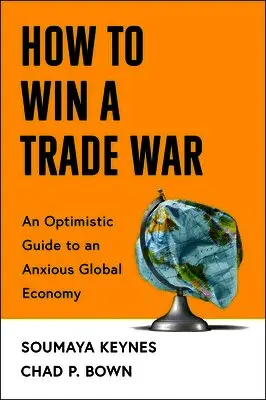
How to Win a Trade War
- Vikt 0,43 kg
347 krhos Bokus · exkl. frakt
102 kr skillnad mellan billigaste och dyraste butik i lager
Dubbelkollat idag
Jämför 2 butiker
- Bokus, 347 kr, frakt enligt butiken. Till butik (öppnas i ny flik)
I lagerFrakt: se butikenDubbelkollad 20:51
347 kr
Lägst
- Akademibokhandeln, 449 kr, frakt enligt butiken. Till butik (öppnas i ny flik)
I lagerFrakt: se butikenDubbelkollad 20:53
449 kr

Priser från butikernas flöden kan ha ändrats: det är priset hos butiken som gäller, så kontrollera det innan du handlar.
Prishistorik
Köp nu eller vänta?
Just nu kostar produkten 347 kr — 10 kr över det lägsta vi sett på 1 månad.
Pris idag
347 kr
- Lägst
- 337 kr
- Snitt
- 342 kr
- Högst
- 347 kr
| 2026-09-15 | 337 kr · Lägst hos Bokus |
|---|---|
| 2026-10-09 | 347 kr · Lägst hos Bokus |
Om produkten
How to Win a Trade War
Läs merLäs mindre
Two top trade experts with popular economics podcasts argue for a new way of operating between the biggest economic powers in the world.We used to take trade for granted. No more. Everything we know about trade has changed. With Trump's tariffs throwing everything up in the air, this is the book to explain the eruption. As we enter this new era of trade conflict, we need a new way of operating between the biggest economic powers in the world. Trade experts Soumaya Keynes and Chad Bown argue that now that the rules of the game have been abandoned, we need a different strategy. Yearning for the old approach to start working again isn't an option. Ultimately, the authors argue that a Western system that protects market-oriented democracies from China's one will require the embrace of some uniquely Chinese tools. If we want to avoid a war with guns, drones, and battles, then we need to understand these weapons better in How to Win a Trade War. The authors give a tour of products and supply chains, from metals to sushi, and the impact of trade-and trade disruptions-on workers and consumers. They follow a lipstick with plastic casing manufactured in China, filled in Mexico, and then shipped to Canada after stopping off at a Texan warehouse. They trace an electronics supply chain from silicon sourced in the Appalachian Mountains, to "wafers" made in Japan, to chips made in Taiwan using equipment made in the Netherlands, to smartphones assembled in China and sent to America. They speculate what all-out economic warfare might look like. What if the world's key shipping lanes got blocked? Or satellite communication went down? What about export restrictions cutting off supplies of key products? Tariffs could be the least of our problems. This timely and accessible book helps readers understand how they, their company, and their country fit into the story at this precarious moment for the global economy.
Specifikationer
Fakta
- Vikt
- 0,43 kg
- GTIN
- 09781668221310
Uppgifter från tillverkare och butiker.