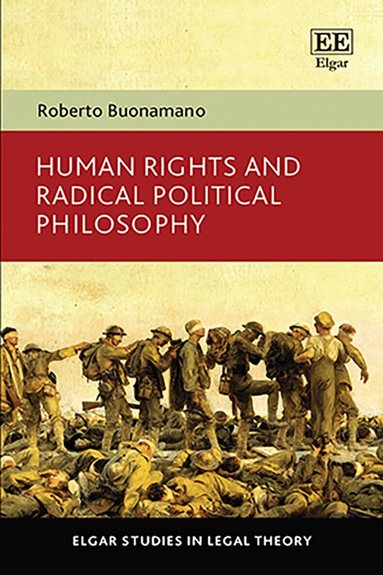
Human Rights and Radical Political Philosophy
1 353 krhos Bokus · exkl. frakt
406 kr skillnad mellan billigaste och dyraste butik i lager
Dubbelkollat idag
Jämför 2 butiker
- Bokus, 1 353 kr, frakt enligt butiken. Till butik (öppnas i ny flik)
I lagerFrakt: se butikenDubbelkollad 09:51
1 353 kr
Lägst
- Akademibokhandeln, 1 759 kr, frakt enligt butiken. Till butik (öppnas i ny flik)
I lagerFrakt: se butikenDubbelkollad 09:53
1 759 kr

Priser från butikernas flöden kan ha ändrats: det är priset hos butiken som gäller, så kontrollera det innan du handlar.
Prishistorik
Köp nu eller vänta?
Just nu kostar produkten 1 353 kr — 4 kr över det lägsta vi sett på 2 veckor.
Under den tiden har det oftast legat runt 1 350–1 360 kr.
Pris idag
1 353 kr
- Lägst
- 1 349 kr
- Snitt
- 1 380 kr
- Högst
- 1 769 kr
| 2026-10-02 | 1 769 kr · Lägst hos Akademibokhandeln |
|---|---|
| 2026-10-03 | 1 358 kr · Lägst hos Bokus |
| 2026-10-07 | 1 360 kr · Lägst hos Bokus |
| 2026-10-10 | 1 358 kr · Lägst hos Bokus |
| 2026-10-11 | 1 353 kr · Lägst hos Bokus |
| 2026-10-12 | 1 349 kr · Lägst hos Bokus |
| 2026-10-16 | 1 357 kr · Lägst hos Bokus |
| 2026-10-17 | 1 354 kr · Lägst hos Bokus |
| 2026-10-18 | 1 353 kr · Lägst hos Bokus |
Om produkten
Human Rights and Radical Political Philosophy
Läs merLäs mindre
Human Rights and Radical Political Philosophy engages in a critique of international human rights law through readings of influential European philosophers. Roberto Buonamano explores novel and valuable perspectives on the conceptualization of human rights and their relationship to the modern State.Taking the radical political philosophies of Michel Foucault, Giorgio Agamben, Jacques Derrida, and Jean-Luc Nancy as a starting point, Buonamano interrogates the commonly received meanings of foundational concepts such as rights, democracy, freedom, and the State. Within the ambit of genealogy, human rights are examined through Foucault's analyses of governmentality and the subject of truth, and through Agamben's political ontological theses. The book furthers this discussion by assessing Derrida's deconstruction of the concepts of humanity, sovereignty, and democracy, as well as Nancy's re-evaluation of the political in terms of non-subjective sovereignty and 'being-in-common'.Providing a more nuanced understanding of the role and theoretical premises of international human rights, this book is an enlightening read for students and scholars of legal theory and international human rights law. Followers of continental European political philosophy and legal theory will greatly benefit from this timely investigation of the ability of human rights to address some of the most consequential socio-political problems affecting modern societies.