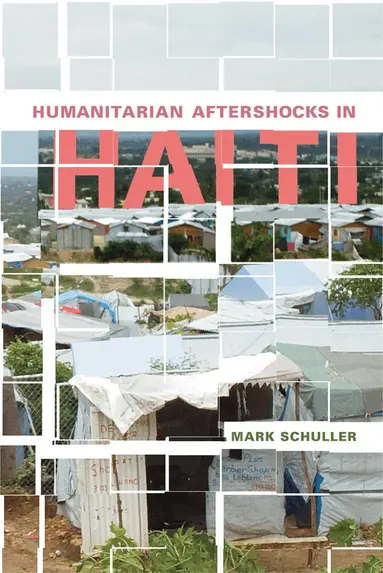
Humanitarian Aftershocks in Haiti
- Vikt 0,4 kg
382 krhos Bokus · exkl. frakt
117 kr skillnad mellan billigaste och dyraste butik i lager
Dubbelkollat idag
Jämför 2 butiker
- Bokus, 382 kr, frakt enligt butiken. Till butik (öppnas i ny flik)
I lagerFrakt: se butikenDubbelkollad 05:51
382 kr
Lägst
- Akademibokhandeln, 499 kr, frakt enligt butiken. Till butik (öppnas i ny flik)
I lagerFrakt: se butikenDubbelkollad 05:53
499 kr

Priser från butikernas flöden kan ha ändrats: det är priset hos butiken som gäller, så kontrollera det innan du handlar.
Prishistorik
Köp nu eller vänta?
Just nu kostar produkten 382 kr — 8 kr över det lägsta vi sett på 1 månad.
Under den tiden har det oftast legat runt 380–400 kr.
Pris idag
382 kr
- Lägst
- 374 kr
- Snitt
- 390 kr
- Högst
- 395 kr
| 2026-09-15 | 390 kr · Lägst hos Bokus |
|---|---|
| 2026-09-22 | 395 kr · Lägst hos Bokus |
| 2026-09-26 | 374 kr · Lägst hos Bokus |
| 2026-09-28 | 395 kr · Lägst hos Bokus |
| 2026-10-10 | 382 kr · Lägst hos Bokus |
| 2026-10-12 | 395 kr · Lägst hos Bokus |
| 2026-10-18 | 382 kr · Lägst hos Bokus |
| 2026-10-21 | 395 kr · Lägst hos Bokus |
| 2026-10-26 | 382 kr · Lägst hos Bokus |
Om produkten
Humanitarian Aftershocks in Haiti
Läs merLäs mindre
Winner of the 2016 Anthropology in Media Award from the American Anthropological Association The 2010 earthquake in Haiti was one of the deadliest disasters in modern history, sparking an international aid response-with pledges and donations of $16 billion-that was exceedingly generous. But now, five years later, that generous aid has clearly failed. In Humanitarian Aftershocks in Haiti, anthropologist Mark Schuller captures the voices of those involved in the earthquake aid response, and they paint a sharp, unflattering view of the humanitarian enterprise. Schuller led an independent study of eight displaced-persons camps in Haiti, compiling more than 150 interviews ranging from Haitian front-line workers and camp directors to foreign humanitarians and many displaced Haitian people. The result is an insightful account of why the multi-billion-dollar aid response not only did little to help but also did much harm, triggering a range of unintended consequences, rupturing Haitian social and cultural institutions, and actually increasing violence, especially against women. The book shows how Haitian people were removed from any real decision-making, replaced by a top-down, NGO-dominated system of humanitarian aid, led by an army of often young, inexperienced foreign workers. Ignorant of Haitian culture, these aid workers unwittingly enacted policies that triggered a range of negative results. Haitian interviewees also note that the NGOs "planted the flag," and often tended to "just do something," always with an eye to the "photo op" (in no small part due to the competition over funding). Worse yet, they blindly supported the eviction of displaced people from the camps, forcing earthquake victims to relocate in vast shantytowns that were hotbeds of violence. Humanitarian Aftershocks in Haiti concludes with suggestions to help improve humanitarian aid in the future, perhaps most notably, that aid workers listen to-and respect the culture of-the victims of catastrophe.
Specifikationer
Fakta
- Vikt
- 0,4 kg
- GTIN
- 09780813574233
Uppgifter från tillverkare och butiker.