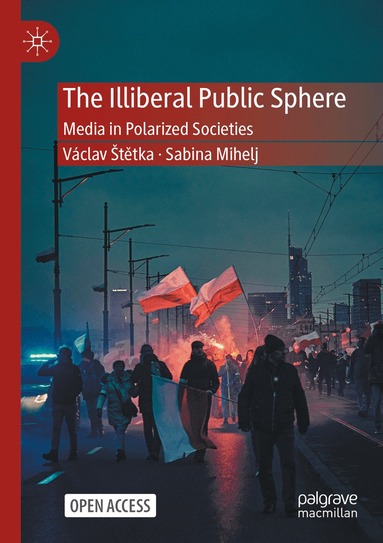
Illiberal Public Sphere
- Vikt 0 kg
443 krhos Bokus · exkl. frakt
136 kr skillnad mellan billigaste och dyraste butik i lager
Dubbelkollat idag
Jämför 2 butiker
- Bokus, 443 kr, frakt enligt butiken. Till butik (öppnas i ny flik)
I lagerFrakt: se butikenDubbelkollad 18:51
443 kr
Lägst
- Akademibokhandeln, 579 kr, frakt enligt butiken. Till butik (öppnas i ny flik)
I lagerFrakt: se butikenDubbelkollad 19:19
579 kr

Priser från butikernas flöden kan ha ändrats: det är priset hos butiken som gäller, så kontrollera det innan du handlar.
Prishistorik
Köp nu eller vänta?
Pris idag
443 kr
- Lägst
- 442 kr
- Snitt
- 445 kr
- Högst
- 449 kr
| 2026-10-06 | 449 kr · Lägst hos Bokus |
|---|---|
| 2026-10-09 | 446 kr · Lägst hos Bokus |
| 2026-10-12 | 443 kr · Lägst hos Bokus |
| 2026-10-13 | 442 kr · Lägst hos Bokus |
| 2026-10-16 | 443 kr · Lägst hos Bokus |
Om produkten
Illiberal Public Sphere
Läs merLäs mindre
This open access book provides the first systematic analysis of the role of the media in the rise of illiberalism, based on an original theoretical framework and extensive empirical research in Eastern Europe - a region that serves as a key battleground in the global advance of illiberalism. Liberal democracies across the world are facing a range of challenges, from the growing influence of illiberal leaders and parties to deepening polarization and declining trust in political elites and mainstream media. Although these developments attracted significant scholarly attention, the factors that contribute to the spreading of illiberalism remain poorly understood, and the communication perspective on illiberalism is particularly underdeveloped.Štětka and Mihelj address this gap by introducing the concept of the illiberal public sphere, identifying the key stages in its development, and explaining what makes illiberalism distinct from related phenomena such as populism. Their analysis reveals how and why the changing communication environment facilitates selective exposure to ideologically and politically homogeneous sources, fosters changes in normative assumptions that guide media trust, increases vulnerability to disinformation, and goes hand in hand with growing hostility to immigration and LGBTQ+ rights. The findings challenge widespread assumptions about digital platforms as key channels of illiberalism and suggest that their role shifts as the illiberal sphere progresses.The arguments presented in this book have important implications for future research on challenges to liberal democracy, as well as for journalists, media regulators and other professionals committed to rebuilding media trust and containing the forces of polarization.
Specifikationer
Fakta
- Vikt
- 0 kg
- GTIN
- 09783031544910
Uppgifter från tillverkare och butiker.