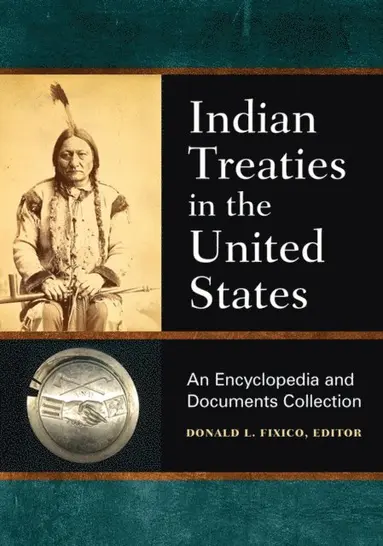
Indian Treaties in the United States
Dubbelkollat idag
Jämför 1 butik
- Bokus, 430 kr, frakt enligt butiken. Till butik (öppnas i ny flik)
I lagerFrakt: se butikenDubbelkollad 04:51
430 kr
Lägst

Priser från butikernas flöden kan ha ändrats: det är priset hos butiken som gäller, så kontrollera det innan du handlar.
Prishistorik
Köp nu eller vänta?
Just nu kostar produkten 430 kr — 9 kr över det lägsta vi sett på 1 månad.
Under den tiden har det oftast legat runt 430–500 kr.
Pris idag
430 kr
- Lägst
- 421 kr
- Snitt
- 474 kr
- Högst
- 497 kr
| 2026-09-15 | 490 kr · Lägst hos Bokus |
|---|---|
| 2026-09-19 | 421 kr · Lägst hos Bokus |
| 2026-09-22 | 497 kr · Lägst hos Bokus |
| 2026-09-27 | 421 kr · Lägst hos Bokus |
| 2026-09-29 | 497 kr · Lägst hos Bokus |
| 2026-10-18 | 430 kr · Lägst hos Bokus |
| 2026-10-22 | 497 kr · Lägst hos Bokus |
| 2026-10-26 | 430 kr · Lägst hos Bokus |
Om produkten
Indian Treaties in the United States
Läs merLäs mindre
This book examines the treaties that promised self-government, financial assistance, cultural protections, and land to the more than 565 tribes of North America (including Alaska, Hawaii, and Canada).Prior to contact with Europeans and, later, Americans, American Indian treaties assumed unique dimensions, often involving lengthy ceremonial meetings during which gifts were exchanged. Europeans and Americans would irrevocably alter the ways in which treaties were negotiated: for example, treaties no longer constituted oral agreements but rather written documents, though both parties generally lacked understanding of the other''s culture. The political consequences of treaty negotiations continue to define the legal status of the more than 565 federally recognized tribes today. These and other aspects of treaty-making will be explored in this single-volume work, which serves to fill a gap in the study of both American history and Native American history. The history of treaty making covers a wide historical swath dating from the earliest treaty in 1788 to latest one negotiated in 1917. Despite the end of formal treaties largely by the end of the 19th century, Native relations with the federal government continued on with the move to reservations and later formal land allotment under the Dawes Act of 1887.