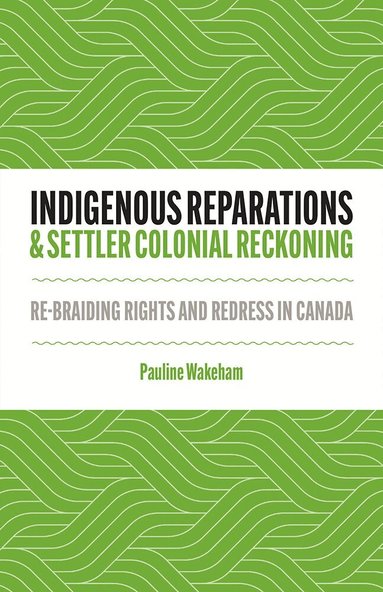
Indigenous Reparations and Settler Colonial Reckoning
- Vikt 0,51 kg
1 391 krhos Bokus · exkl. frakt
418 kr skillnad mellan billigaste och dyraste butik i lager
Dubbelkollat idag
Jämför 2 butiker
- Bokus, 1 391 kr, frakt enligt butiken. Till butik (öppnas i ny flik)
I lagerFrakt: se butikenDubbelkollad 08:51
1 391 kr
Lägst
- Akademibokhandeln, 1 809 kr, frakt enligt butiken. Till butik (öppnas i ny flik)
I lagerFrakt: se butikenDubbelkollad 08:53
1 809 kr

Priser från butikernas flöden kan ha ändrats: det är priset hos butiken som gäller, så kontrollera det innan du handlar.
Prishistorik
Köp nu eller vänta?
Just nu kostar produkten 1 391 kr — 13 kr över det lägsta vi sett på 4 veckor.
Under den tiden har det oftast legat runt 1 380–1 400 kr.
Pris idag
1 391 kr
- Lägst
- 1 378 kr
- Snitt
- 1 401 kr
- Högst
- 1 799 kr
| 2026-09-19 | 1 799 kr · Lägst hos Akademibokhandeln |
|---|---|
| 2026-09-20 | 1 381 kr · Lägst hos Bokus |
| 2026-09-23 | 1 383 kr · Lägst hos Bokus |
| 2026-09-24 | 1 382 kr · Lägst hos Bokus |
| 2026-09-25 | 1 379 kr · Lägst hos Bokus |
| 2026-09-27 | 1 378 kr · Lägst hos Bokus |
| 2026-09-30 | 1 380 kr · Lägst hos Bokus |
| 2026-10-02 | 1 389 kr · Lägst hos Bokus |
| 2026-10-03 | 1 390 kr · Lägst hos Bokus |
| 2026-10-04 | 1 395 kr · Lägst hos Bokus |
| 2026-10-06 | 1 397 kr · Lägst hos Bokus |
| 2026-10-10 | 1 395 kr · Lägst hos Bokus |
| 2026-10-12 | 1 386 kr · Lägst hos Bokus |
| 2026-10-16 | 1 395 kr · Lägst hos Bokus |
| 2026-10-17 | 1 391 kr · Lägst hos Bokus |
Om produkten
Indigenous Reparations and Settler Colonial Reckoning
Läs merLäs mindre
How Indigenous communities are transforming the idea and practice of reparations through their laws and leadershipIn recent decades, a growing number of Indigenous groups across Canada have initiated movements for colonial reparations. Too often, the settler state has responded by attempting to enfold their work into a narrative of reconciliation that consigns colonialism to "sad chapters" of history. In this book, Pauline Wakeham calls attention to the ways that Indigenous reparations movements exceed state reconciliatory frameworks and prompt a deeper reckoning with the enduring structures of settler colonialism.To expose and redress colonial injustices, Indigenous reparations movements draw upon long local traditions of political organizing as well as transformations on the global stage since World War II. As international law formulated new instruments regarding gross human rights violations, atrocity crimes, and the reparative obligations of states, colonized peoples across the world have sought to mobilize these mechanisms in their struggles for decolonization and reparations. While international law has provided strategic tools for this work, the colonial foundations of the field continue to limit how it conceptualizes and shapes access to justice. Indigenous Reparations and Settler Colonial Reckoning traces the specific implications for Indigenous nations whose land is occupied by settler states-nations whose legal orders remain subordinated to both settler "domestic" and international legal systems.Amid this complex multijurisdictional terrain, how are Indigenous peoples carving out space to articulate their own visions of justice? To answer this question, Wakeham learns from the Inuit-led Qikiqtani Truth Commission as well as reparations movements for residential schools and the High Arctic Relocations of 1953 and 1955. These movements offer powerful lessons about the importance of centering Indigenous leadership and laws in redress processes, thereby connecting reparations to the living enactment of Indigenous rights.Retail e-book files for this title are screen-reader friendly with images accompanied by short alt text and/or extended descriptions.
Specifikationer
Fakta
- Vikt
- 0,51 kg
- GTIN
- 09781517921491
Uppgifter från tillverkare och butiker.