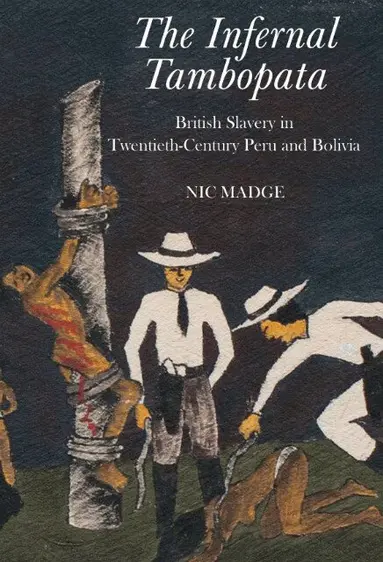
Infernal Tambopata
2 609 krhos Bokus · exkl. frakt
780 kr skillnad mellan billigaste och dyraste butik i lager
Dubbelkollat idag
Jämför 2 butiker
- Bokus, 2 609 kr, frakt enligt butiken. Till butik (öppnas i ny flik)
I lagerFrakt: se butikenDubbelkollad 05:51
2 609 kr
Lägst
- Akademibokhandeln, 3 389 kr, frakt enligt butiken. Till butik (öppnas i ny flik)
I lagerFrakt: se butikenDubbelkollad 04:53
3 389 kr

Priser från butikernas flöden kan ha ändrats: det är priset hos butiken som gäller, så kontrollera det innan du handlar.
Prishistorik
Köp nu eller vänta?
Just nu kostar produkten 2 609 kr — 101 kr över det lägsta vi sett på 1 månad.
Pris idag
2 609 kr
- Lägst
- 2 508 kr
- Snitt
- 2 550 kr
- Högst
- 2 609 kr
| 2026-09-15 | 2 508 kr · Lägst hos Bokus |
|---|---|
| 2026-10-13 | 2 609 kr · Lägst hos Bokus |
Om produkten
Infernal Tambopata
Läs merLäs mindre
Ebook available to libraries exclusively as part of the JSTOR Path to Open initiative.The Infernal Tambopata tells the story of a British-owned rubber company on the Peruvian-Bolivian frontier in the early twentieth century that, despite abolition decades earlier, systematically enslaved indigenous people.Drawing on extensive unpublished company records, diplomatic correspondence and contemporary eyewitness accounts, it reconstructs how the Tambopata Rubber Syndicate recruited, confined and exploited its workforce under conditions of extreme violence, deprivation and coercion.The book challenges persistent narratives that portray the "Rubber Boom" as socially benign, and reconsiders long-standing assumptions about British opposition to slavery. It reveals how British capital, commercial interests and diplomacy were all implicated in the creation and maintenance of brutally coercive labour regimes.Combining meticulous archival research with a compelling narrative, The Infernal Tambopata recovers the lived experience of enslaved people and offers a powerful reappraisal of the human cost of the rubber industry. It also shows how forms of slavery persisted into the modern world, and why this history matters for understanding exploitation in today's extractive industries.