Meyer & Meyer Fachverlag und Buchhandel GmbH
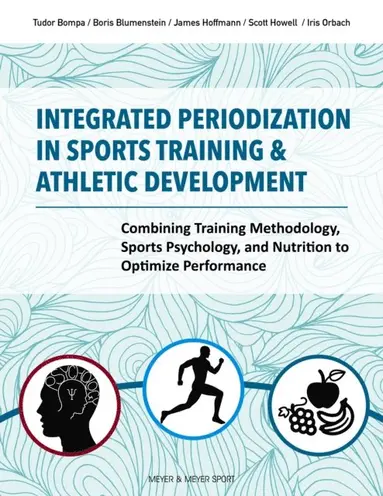
Integrated Periodization in Sports Training & Athletic Development
Dubbelkollade priser
Jämför 2 butiker
- Bokus, 261 kr, frakt enligt butiken. Till butik (öppnas i ny flik)
I lagerFrakt: se butikenDubbelkollad 09:51
261 kr
Lägst
- Adlibris, 260 kr, frakt enligt butiken. Till butik (öppnas i ny flik)
Slut i lagerFrakt: se butikenDubbelkollad 27 okt. 09:10
260 kr


Priser från butikernas flöden kan ha ändrats: det är priset hos butiken som gäller, så kontrollera det innan du handlar.
Prishistorik
Köp nu eller vänta?
Just nu kostar produkten 261 kr — 4 kr över det lägsta vi sett på 1 månad.
Under den tiden har det oftast legat runt 260 kr.
Pris idag
261 kr
- Lägst
- 257 kr
- Snitt
- 259 kr
- Högst
- 261 kr
| 2026-09-15 | 257 kr · Lägst hos Adlibris |
|---|---|
| 2026-10-06 | 261 kr · Lägst hos Bokus |
| 2026-10-08 | 260 kr · Lägst hos Adlibris |
| 2026-10-25 | 261 kr · Lägst hos Bokus |
Om produkten
Integrated Periodization in Sports Training & Athletic Development
Läs merLäs mindre
Integrated Periodization in Sports Training & Athletic Development considers the large problem of training specialists working in isolation and builds a case for integrated periodization as conceived by Tudor Bompa. This book on periodization is the first of its kind to combine the concepts of training methodology, sports psychology, and nutrition in the discussion on periodization training. The book begins by defining periodization as a specific theory and methodology, historically detailing how the term was formally derived, differentiating it from the current view of periodization as a Russian concept. Next, the authors clarify some common misconceptions of periodization by integrating evidence-based practice with an emphasis on sports, nutrition, psychological preparation, and training methodology. Then the book explores sport-specific applications of integrated periodization, development of biomotor abilities, and long-term planning. A novel paradigm for viewing adaptation is introduced, moving past homeostasis to include allostasis, and one approach (Maximum Recoverable Volume) that may be used to more effectively manage fatigue is detailed. In addition, psychological preparation, the newly developed LMA (Learning-Modification-Application) approach, and nutritional principles are presented based on the periodization principle. Finally, the book includes a chapter on tapering strategies to peak athletes for competition using an integrated approach. Integrated Periodization in Sports Training & Athletic Development is a must-have for all trainers and athletes looking to better understand periodization and how to adapt it to training.