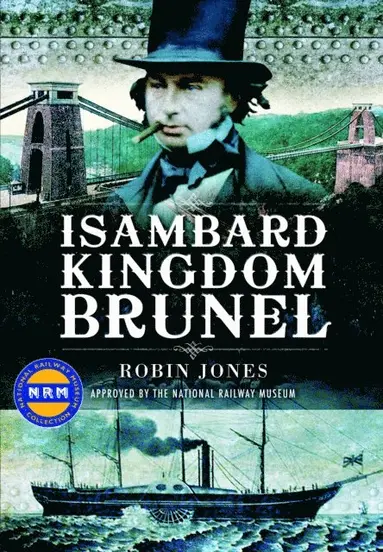
Isambard Kingdom Brunel
Dubbelkollat idag
Jämför 1 butik
- Bokus, 28 kr, frakt enligt butiken. Till butik (öppnas i ny flik)
I lagerFrakt: se butikenDubbelkollad 02:51
28 kr
Lägst

Priser från butikernas flöden kan ha ändrats: det är priset hos butiken som gäller, så kontrollera det innan du handlar.
Prishistorik
Köp nu eller vänta?
Just nu kostar produkten 28 kr — 1 kr över det lägsta vi sett på 1 månad.
Under den tiden har det oftast legat runt 30–160 kr.
Pris idag
28 kr
- Lägst
- 27 kr
- Snitt
- 74 kr
- Högst
- 167 kr
| 2026-09-15 | 27 kr · Lägst hos Bokus |
|---|---|
| 2026-09-17 | 163 kr · Lägst hos Bokus |
| 2026-09-24 | 27 kr · Lägst hos Bokus |
| 2026-10-12 | 167 kr · Lägst hos Bokus |
| 2026-10-21 | 28 kr · Lägst hos Bokus |
Om produkten
Isambard Kingdom Brunel
Läs merLäs mindre
A biography of the nineteenth-century Englishman who was "one of the most ingenious and prolific figures in engineering history" (Nature). Civil and mechanical engineer Isambard Kingdom Brunel''s accomplishments were extraordinary-involving the Great Western Railway, the SS Great Britain, the Clifton Suspension Bridge, prefabricated hospital buildings for use during the Crimean War, and more. Born in Portsmouth in 1806, he followed in his French father''s professional footsteps-and went on to play a major role in the Industrial Revolution. Brunel the great engineer would habitually throw out the rule book of tradition and established practice and start again with a blank sheet of paper, taking the technology of the day to its limits and then going another mile. But there was also Brunel the visionary, who knew that transport technology had the power to change the world, and that he had the ability to deliver those changes. Finally, there was Brunel the artist, who rarely saw technology as just functional, and strove to entwine the fruits of the Industrial Revolution with the elegance and grace of the neoclassical painter. His bridges, tunnels and railway infrastructure have entered a third century of regular use, and the beauty of their design and structure has rarely been equaled. The three decades from the 1830s to the 1850s saw an explosion of technical excellence, and it was Brunel who in so many cases lit the blue touch paper. He did not always get it right the first time, and it was left to others to reap the fruits of his many labors. Nevertheless, his actions fast-forwarded the march of progress by several decades. This biography tells his impressive story. Includes color photographs