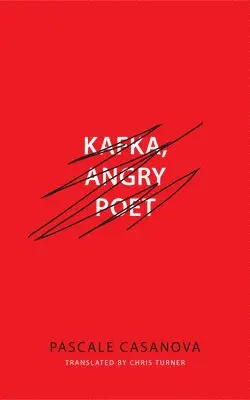
Kafka, Angry Poet
- Vikt 0,71 kg
493 krhos Bokus · exkl. frakt
146 kr skillnad mellan billigaste och dyraste butik i lager
Dubbelkollat idag
Jämför 2 butiker
- Bokus, 493 kr, frakt enligt butiken. Till butik (öppnas i ny flik)
I lagerFrakt: se butikenDubbelkollad 14:51
493 kr
Lägst
- Akademibokhandeln, 639 kr, frakt enligt butiken. Till butik (öppnas i ny flik)
I lagerFrakt: se butikenDubbelkollad 14:53
639 kr

Priser från butikernas flöden kan ha ändrats: det är priset hos butiken som gäller, så kontrollera det innan du handlar.
Prishistorik
Köp nu eller vänta?
Just nu kostar produkten 493 kr — 221 kr över det lägsta vi sett på 1 månad.
Under den tiden har det oftast legat runt 270–490 kr.
Pris idag
493 kr
- Lägst
- 272 kr
- Snitt
- 374 kr
- Högst
- 493 kr
| 2026-09-15 | 272 kr · Lägst hos Bokus |
|---|---|
| 2026-09-18 | 273 kr · Lägst hos Bokus |
| 2026-09-25 | 272 kr · Lägst hos Bokus |
| 2026-10-02 | 274 kr · Lägst hos Bokus |
| 2026-10-04 | 275 kr · Lägst hos Bokus |
| 2026-10-05 | 276 kr · Lägst hos Bokus |
| 2026-10-11 | 493 kr · Lägst hos Bokus |
Om produkten
Kafka, Angry Poet
Läs merLäs mindre
Franz Kafka was one of the most influential writers of the twentieth century. His writing contributed greatly to existentialism, and the term "Kafkaesque" is now synonymous with the literature of the surreal, the complex, and the illogical. His works sustained themes of violence, family conflict, bizarre and all-powerful bureaucracies, and fantastical transformations. However, in Kafka, Angry Poet, Pascale Casanova looks past the customary analyses of Kafka's work and dives deep into his mind, examining his motives rather than the results. She bravely asks the question, "What if Kafka were the most radical of social critics? What if he had actually attempted to pull the wool over our eyes with narratives that are, in fact, subtly deceptive?" The hypothesis she develops is that Kafka began with an awareness of the tragic fate of the German-speaking Jews of early twentieth-century Prague and was subsequently led to reflect on other forms of power, such as male dominance and colonial oppression. The stories produced as a result were traps for the unwary, throwing the reader off the scent with the use of unreliable and even deceitful narrators.Curiously, says Casanova, it is not in literature that one finds the answers to these questions but in German ethnology, a field which, as an intellectual of the Austro-Hungarian Empire, Kafka knew well. Through her detailed research, Casanova shows us a combative Kafka who is at once ethnologist and investigator, unstintingly denouncing all forms of domination with the kind of tireless rage that was his hallmark. In so doing, she sheds light on the deep-seated reasons for Kafka's anger.
Specifikationer
Fakta
- Vikt
- 0,71 kg
- GTIN
- 09780857421623
Uppgifter från tillverkare och butiker.