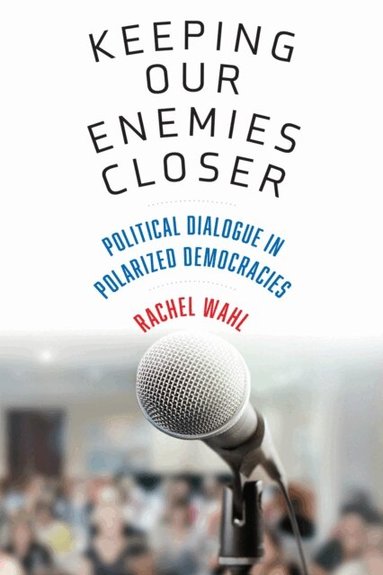
Keeping Our Enemies Closer
Dubbelkollat idag
Jämför 1 butik
- Bokus, 528 kr, frakt enligt butiken. Till butik (öppnas i ny flik)
I lagerFrakt: se butikenDubbelkollad 15:58
528 kr
Lägst

Priser från butikernas flöden kan ha ändrats: det är priset hos butiken som gäller, så kontrollera det innan du handlar.
Prishistorik
Köp nu eller vänta?
Pris idag
528 kr
- Lägst
- 516 kr
- Snitt
- 525 kr
- Högst
- 528 kr
| 2026-10-09 | 516 kr · Lägst hos Bokus |
|---|---|
| 2026-10-11 | 528 kr · Lägst hos Bokus |
Om produkten
Keeping Our Enemies Closer
Läs merLäs mindre
An inside look into real-life conversations across ideological, racial, and institutional linesWhat does it take for a progressive student and a conservative peer to view each other with respect? Can trust form between a police officer and a community member after years of tension and mistrust? At a time when political polarization seems insurmountable, Rachel Wahl offers a rare glimpse into what happens when people with opposing views sit down and talk- not with the goal to debate or "e;prove"e; their political point but with the goal to understand the life experiences, hopes, fears, and ideas that drive their disagreements. Drawing on in-depth empirical research with college students, police officers, and community members, this groundbreaking book takes readers inside real-life conversations across ideological, racial, and institutional lines.Wahl draws on political theory to examine two cases: structured dialogue between students and a series of forums held between officers and community members. Rather than idealizing dialogue, Keeping Our Enemies Closer reveals its complexity-where it succeeds, where it falters, and how it can reshape not just minds, but institutions. Through gripping narratives and rigorous analysis, this book challenges assumptions and offers a new framework for thinking about communication in fractured times. An essential read for educators, activists, and policymakers, Keeping Our Enemies Closer has much to offer anyone seeking to understand how connection is forged-or frayed-in twenty-first-century America.