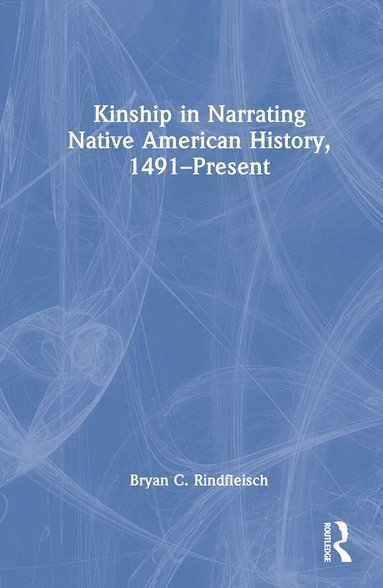
Kinship in Narrating Native American History, 1491-Present
- Vikt 0,6 kg
2 585 krhos Bokus · exkl. frakt
774 kr skillnad mellan billigaste och dyraste butik i lager
Dubbelkollat idag
Jämför 2 butiker
- Bokus, 2 585 kr, frakt enligt butiken. Till butik (öppnas i ny flik)
I lagerFrakt: se butikenDubbelkollad 05:51
2 585 kr
Lägst
- Akademibokhandeln, 3 359 kr, frakt enligt butiken. Till butik (öppnas i ny flik)
I lagerFrakt: se butikenDubbelkollad 05:53
3 359 kr

Priser från butikernas flöden kan ha ändrats: det är priset hos butiken som gäller, så kontrollera det innan du handlar.
Prishistorik
Köp nu eller vänta?
Pris idag
2 585 kr
- Lägst
- 2 585 kr
- Snitt
- 2 773 kr
- Högst
- 3 329 kr
| 2026-10-15 | 3 329 kr · Lägst hos Akademibokhandeln |
|---|---|
| 2026-10-16 | 2 588 kr · Lägst hos Bokus |
| 2026-10-18 | 2 585 kr · Lägst hos Bokus |
Om produkten
Kinship in Narrating Native American History, 1491-Present
Läs merLäs mindre
This book synthesizes traditional and modern historiography to narrate the practices of Native American family and kinship from 1491 to the present, highlighting how they evolved in response to Euro-American colonialism.For centuries, matrilineal kinship descent not only structured Indigenous worlds but was embedded throughout Native politics, trade, religious beliefs, social structures, and more. After European and African arrivals, family and kinship systems continued to define Indigenous worlds and communities. However, these practices experienced profound pressures due to the unprecedented threats posed by Euro-American colonialism. Some practices evolved and adapted, at times retaining elements of matrilineal kinship systems and at other times incorporating non-Native cultural practices or giving life to new traditions. This book narrates these different paths of evolution, through the eras of Contact, to the Seven Years' War and American Revolution, federal Indian removal policy, U.S. expansion and the creation of Indian Territory, and more, to demonstrate how the creation of the United States represented the greatest threat to Indigenous worlds and communities. Consequently, Native family and kinship systems evolved even more rapidly, culminating in the assimilation era of boarding schools and reservation allotment. Nonetheless, this book stresses how Indigenous concepts of family and kinship remained agile, transformative, and connected to emerging assertions of tribal sovereignty and nationhood in the twentieth and twenty-first centuries.Kinship in Narrating Native American History, 1491‒Present will be of interest to students and scholars of Native American history, American women's history, Sociology, and Anthropology.
Specifikationer
Fakta
- Vikt
- 0,6 kg
- GTIN
- 09781032981031
Uppgifter från tillverkare och butiker.