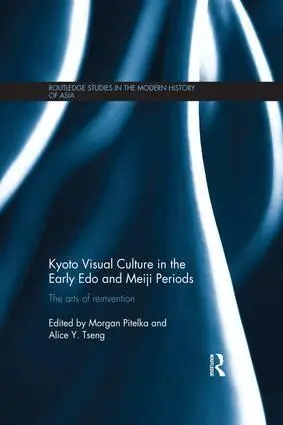
Kyoto Visual Culture in the Early Edo and Meiji Periods
- Vikt 0,29 kg
776 krhos Bokus · exkl. frakt
233 kr skillnad mellan billigaste och dyraste butik i lager
Dubbelkollat idag
Jämför 2 butiker
- Bokus, 776 kr, frakt enligt butiken. Till butik (öppnas i ny flik)
I lagerFrakt: se butikenDubbelkollad 21:51
776 kr
Lägst
- Akademibokhandeln, 1 009 kr, frakt enligt butiken. Till butik (öppnas i ny flik)
I lagerFrakt: se butikenDubbelkollad 21:53
1 009 kr

Priser från butikernas flöden kan ha ändrats: det är priset hos butiken som gäller, så kontrollera det innan du handlar.
Prishistorik
Köp nu eller vänta?
Just nu kostar produkten 776 kr — 18 kr över det lägsta vi sett på 1 månad.
Under den tiden har det oftast legat runt 760–770 kr.
Pris idag
776 kr
- Lägst
- 758 kr
- Snitt
- 767 kr
- Högst
- 776 kr
| 2026-09-15 | 764 kr · Lägst hos Bokus |
|---|---|
| 2026-09-16 | 762 kr · Lägst hos Bokus |
| 2026-09-18 | 761 kr · Lägst hos Bokus |
| 2026-09-20 | 759 kr · Lägst hos Bokus |
| 2026-09-22 | 760 kr · Lägst hos Bokus |
| 2026-09-24 | 758 kr · Lägst hos Bokus |
| 2026-09-29 | 759 kr · Lägst hos Bokus |
| 2026-10-03 | 767 kr · Lägst hos Bokus |
| 2026-10-05 | 768 kr · Lägst hos Bokus |
| 2026-10-07 | 775 kr · Lägst hos Bokus |
| 2026-10-09 | 774 kr · Lägst hos Bokus |
| 2026-10-10 | 772 kr · Lägst hos Bokus |
| 2026-10-11 | 770 kr · Lägst hos Bokus |
| 2026-10-17 | 772 kr · Lägst hos Bokus |
| 2026-10-19 | 771 kr · Lägst hos Bokus |
| 2026-10-21 | 770 kr · Lägst hos Bokus |
| 2026-10-27 | 775 kr · Lägst hos Bokus |
| 2026-10-28 | 776 kr · Lägst hos Bokus |
Om produkten
Kyoto Visual Culture in the Early Edo and Meiji Periods
Läs merLäs mindre
The city of Kyoto has undergone radical shifts in its significance as a political and cultural center, as a hub of the national bureaucracy, as a symbolic and religious center, and as a site for the production and display of art. However, the field of Japanese history and culture lacks a book that considers Kyoto on its own terms as a historic city with a changing identity.Examining cultural production in the city of Kyoto in two periods of political transition, this book promises to be a major step forward in advancing our knowledge of Kyoto's history and culture. Its chapters focus on two periods in Kyoto's history in which the old capital was politically marginalized: the early Edo period, when the center of power shifted from the old imperial capital to the new warriors' capital of Edo; and the Meiji period, when the imperial court itself was moved to the new modern center of Tokyo. The contributors argue that in both periods the response of Kyoto elites-emperors, courtiers, tea masters, municipal leaders, monks, and merchants-was artistic production and cultural revival. As an artistic, cultural and historical study of Japan's most important historic city, this book will be invaluable to students and scholars of Japanese history, Asian history, the Edo and Meiji periods, art history, visual culture and cultural history.
Specifikationer
Fakta
- Vikt
- 0,29 kg
- GTIN
- 09780367026752
Uppgifter från tillverkare och butiker.