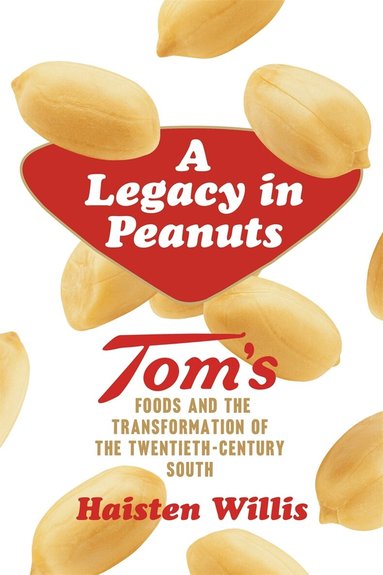
Legacy in Peanuts
357 krhos Bokus · exkl. frakt
112 kr skillnad mellan billigaste och dyraste butik i lager
Dubbelkollat idag
Jämför 2 butiker
- Bokus, 357 kr, frakt enligt butiken. Till butik (öppnas i ny flik)
I lagerFrakt: se butikenDubbelkollad 18:51
357 kr
Lägst
- Akademibokhandeln, 469 kr, frakt enligt butiken. Till butik (öppnas i ny flik)
I lagerFrakt: se butikenDubbelkollad 19:19
469 kr

Priser från butikernas flöden kan ha ändrats: det är priset hos butiken som gäller, så kontrollera det innan du handlar.
Prishistorik
Köp nu eller vänta?
Just nu kostar produkten 357 kr — 11 kr över det lägsta vi sett på 2 veckor.
Under den tiden har det oftast legat runt 350–360 kr.
Pris idag
357 kr
- Lägst
- 346 kr
- Snitt
- 357 kr
- Högst
- 449 kr
| 2026-10-01 | 449 kr · Lägst hos Akademibokhandeln |
|---|---|
| 2026-10-02 | 346 kr · Lägst hos Bokus |
| 2026-10-10 | 357 kr · Lägst hos Bokus |
Om produkten
Legacy in Peanuts
Läs merLäs mindre
In A Legacy in Peanuts, Columbus, Georgia, native Haisten Willis tells the story of Columbus's own Tom's Foods, a firm that aided the South's industrialization and played a major role in establishing the humble peanut as a cash crop. In the 1920s, founder Tom Huston revolutionized both the manufacturing and marketing of peanuts through his patented shelling machines and the creation of the company's signature product, Tom's Toasted Peanuts. With an assist from legendary scientist George Washington Carver, Huston turned Tom's into a multimillion-dollar business in just a few years-before losing it all on another big business bet. Future Columbus mayor Walter Richards then took over, stabilizing Tom's and expanding its lineup to include crackers and candy during his three decades at the helm. The stuff of childhood memories, lazy afternoons, and countless workplace break rooms, the story of Tom's Foods reveals fundamental truths about business, farming, factory labor, race relations, innovation, and class in the twentieth-century South. By following the four largest players in the company's history-Huston, Richards, longtime president J. W. "Bill" Feighner, and midwestern billionaire Michael Heisley, who purchased Tom's as a distressed asset in 1993 and proved to be its final owner before a 2005 bankruptcy-Willis illuminates a complex story of the modernizing South.