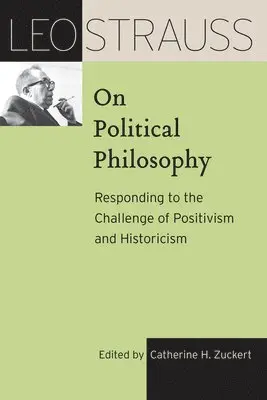
Leo Strauss on Political Philosophy
- Vikt 0,37 kg
374 kr375 kr−0% senaste veckanhos Bokus · exkl. frakt
Jämfört med det lägsta pris vi sett de 30 dagarna före sänkningen.
115 kr skillnad mellan billigaste och dyraste butik i lager
Dubbelkollade priser
Jämför 3 butiker
- Bokus, 374 kr, frakt enligt butiken. Till butik (öppnas i ny flik)
I lagerFrakt: se butikenDubbelkollad 22:51
374 kr
Lägst
- Akademibokhandeln, 489 kr, frakt enligt butiken. Till butik (öppnas i ny flik)
I lagerFrakt: se butikenDubbelkollad 22:53
489 kr
- Adlibris, 454 kr, frakt enligt butiken. Till butik (öppnas i ny flik)
Slut i lagerFrakt: se butikenDubbelkollad 27 okt. 09:10
454 kr


Priser från butikernas flöden kan ha ändrats: det är priset hos butiken som gäller, så kontrollera det innan du handlar.
Prishistorik
Köp nu eller vänta?
Just nu kostar produkten 374 kr — 7 kr över det lägsta vi sett på 1 månad.
Under den tiden har det oftast legat runt 380–450 kr.
Pris idag
374 kr
- Lägst
- 367 kr
- Snitt
- 420 kr
- Högst
- 454 kr
| 2026-09-15 | 454 kr · Lägst hos Bokus |
|---|---|
| 2026-09-18 | 367 kr · Lägst hos Bokus |
| 2026-09-20 | 454 kr · Lägst hos Bokus |
| 2026-09-24 | 369 kr · Lägst hos Bokus |
| 2026-09-27 | 454 kr · Lägst hos Bokus |
| 2026-10-07 | 378 kr · Lägst hos Bokus |
| 2026-10-10 | 454 kr · Lägst hos Bokus |
| 2026-10-13 | 375 kr · Lägst hos Bokus |
| 2026-10-21 | 454 kr · Lägst hos Bokus |
| 2026-10-27 | 374 kr · Lägst hos Bokus |
Om produkten
Leo Strauss on Political Philosophy
Läs merLäs mindre
Leo Strauss is known primarily for reviving classical political philosophy through careful analyses of works by ancient thinkers. As with his published writings, Strauss's seminars devoted to specific philosophers were notoriously dense, accessible only to graduate students and scholars with a good command of the subject. In 1965, however, Strauss offered an introductory course on political philosophy at the University of Chicago. Using a conversational style, he sought to make political philosophy, as well as his own ideas and methods, understandable to those with little background on the subject. Leo Strauss on Political Philosophy brings together the lectures that comprise Strauss's "Introduction to Political Philosophy." Strauss begins by emphasizing the importance of political philosophy in determining the common good of society and critically examining the two most powerful contemporary challenges to the possibility of using political theory to learn about and develop the best political order: positivism and historicism. In seeking the common good, classical political philosophers like Plato and Aristotle did not distinguish between political philosophy and political science. Today, however, political philosophy must contend with the contemporary belief that it is impossible to know what the good society really is. Strauss emphasizes the need to study the history of political philosophy to see whether the changes in the understanding of nature and conceptions of justice that gradually led people to believe that it is not possible to determine what the best political society is are either necessary or valid. In doing so, he ranges across the entire history of political philosophy, providing a valuable, thematically coherent foundation, including explications of many canonical thinkers, such as Auguste Comte and Immanuel Kant, about whom Strauss did not write extensively in his published writings.
Specifikationer
Fakta
- Vikt
- 0,37 kg
- GTIN
- 09780226816807
Uppgifter från tillverkare och butiker.