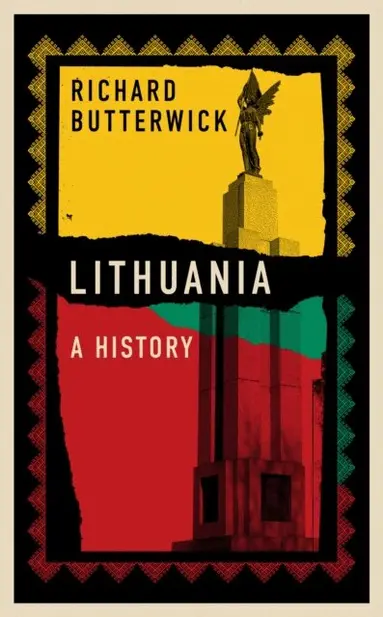
Lithuania
Dubbelkollat idag
Jämför 1 butik
- Bokus, 238 kr, frakt enligt butiken. Till butik (öppnas i ny flik)
I lagerFrakt: se butikenDubbelkollad 04:51
238 kr
Lägst

Priser från butikernas flöden kan ha ändrats: det är priset hos butiken som gäller, så kontrollera det innan du handlar.
Prishistorik
Köp nu eller vänta?
Just nu kostar produkten 238 kr — 11 kr över det lägsta vi sett på 1 månad.
Under den tiden har det oftast legat runt 230–240 kr.
Pris idag
238 kr
- Lägst
- 227 kr
- Snitt
- 235 kr
- Högst
- 238 kr
| 2026-09-15 | 235 kr · Lägst hos Bokus |
|---|---|
| 2026-09-19 | 227 kr · Lägst hos Bokus |
| 2026-09-22 | 238 kr · Lägst hos Bokus |
| 2026-09-26 | 227 kr · Lägst hos Bokus |
| 2026-09-28 | 238 kr · Lägst hos Bokus |
| 2026-10-13 | 232 kr · Lägst hos Bokus |
| 2026-10-18 | 238 kr · Lägst hos Bokus |
| 2026-10-22 | 232 kr · Lägst hos Bokus |
| 2026-10-29 | 238 kr · Lägst hos Bokus |
Om produkten
Lithuania
Läs merLäs mindre
Lithuania is often portrayed as a small nation- state that has survived against the odds of history: together with Estonia and Latvia, it won independence at the end of the First World War, lost it to the Soviet Union in 193940, regained it in 19901, and joined NATO and the EU in 2004, angering the Kremlin. But Lithuanias rich and complex history stretches back much further than these events, and much further than many realise.In the fourteenth century, Europes last pagan dynasty ruled a vast empire stretching from forests on the Baltic shores to the steppes north of the Black Sea. Forging a remarkable, liberty-based union with the Kingdom of Poland, for 400 years the Grand Duchy of Lithuania blocked Moscows pretensions to rule all of Rus, particularly Belarus and Ukraine. Yet it was in competition with Poles, and under Russian imperial rule, that the modern ethnic Lithuanian nation emerged in the nineteenth century.This is a lively and accessible history of a fascinating country that was once much larger than it is today; a land where, for centuries, peoples and communitiesincluding Belarusians, Ukrainians, Germans, Poles, Russians, Jews, Karaites and Tatarslived together in concord and discord.