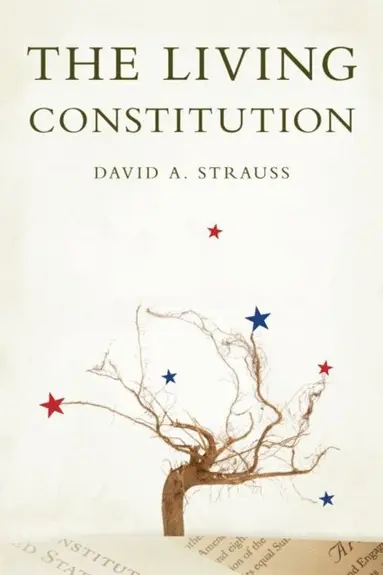
Living Constitution
Dubbelkollade priser
Jämför 1 butik
- Bokus, 171 kr, frakt enligt butiken. Till butik (öppnas i ny flik)
I lagerFrakt: se butikenDubbelkollad 30 okt. 23:51
171 kr
Lägst

Priser från butikernas flöden kan ha ändrats: det är priset hos butiken som gäller, så kontrollera det innan du handlar.
Prishistorik
Köp nu eller vänta?
Just nu kostar produkten 171 kr — 71 kr över det lägsta vi sett på 1 månad.
Under den tiden har det oftast legat runt 100–170 kr.
Pris idag
171 kr
- Lägst
- 100 kr
- Snitt
- 146 kr
- Högst
- 171 kr
| 2026-09-15 | 149 kr · Lägst hos Bokus |
|---|---|
| 2026-09-29 | 100 kr · Lägst hos Bokus |
| 2026-10-06 | 103 kr · Lägst hos Bokus |
| 2026-10-11 | 171 kr · Lägst hos Bokus |
Om produkten
Living Constitution
Läs merLäs mindre
Supreme Court Justice Antonin Scalia once remarked that the theory of an evolving, "living" Constitution effectively "rendered the Constitution useless." He wanted a "dead Constitution," he joked, arguing it must be interpreted as the framers originally understood it. In The Living Constitution, leading constitutional scholar David Strauss forcefully argues against the claims of Scalia, Clarence Thomas, Robert Bork, and other "originalists," explaining in clear, jargon-free English how the Constitution can sensibly evolve, without falling into the anything-goes flexibility caricatured by opponents. The living Constitution is not an out-of-touch liberal theory, Strauss further shows, but a mainstream tradition of American jurisprudence--a common-law approach to the Constitution, rooted in the written document but also based on precedent. Each generation has contributed precedents that guide and confine judicial rulings, yet allow us to meet the demands of today, not force us to follow the commands of the long-dead Founders. Strauss explores how judicial decisions adapted the Constitution''s text (and contradicted original intent) to produce some of our most profound accomplishments: the end of racial segregation, the expansion of women''s rights, and the freedom of speech. By contrast, originalism suffers from fatal flaws: the impossibility of truly divining original intent, the difficulty of adapting eighteenth-century understandings to the modern world, and the pointlessness of chaining ourselves to decisions made centuries ago. David Strauss is one of our leading authorities on Constitutional law--one with practical knowledge as well, having served as Assistant Solicitor General of the United States and argued eighteen cases before the United States Supreme Court. Now he offers a profound new understanding of how the Constitution can remain vital to life in the twenty-first century.