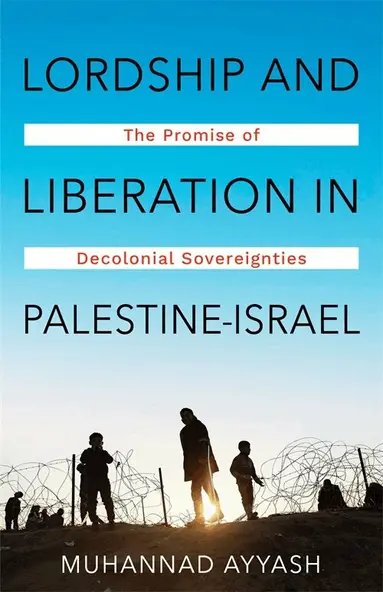
Lordship and Liberation in Palestine-Israel
304 krhos Bokus · exkl. frakt
95 kr skillnad mellan billigaste och dyraste butik i lager
Dubbelkollat idag
Jämför 2 butiker
- Bokus, 304 kr, frakt enligt butiken. Till butik (öppnas i ny flik)
I lagerFrakt: se butikenDubbelkollad 12:51
304 kr
Lägst
- Akademibokhandeln, 399 kr, frakt enligt butiken. Till butik (öppnas i ny flik)
I lagerFrakt: se butikenDubbelkollad 12:53
399 kr

Priser från butikernas flöden kan ha ändrats: det är priset hos butiken som gäller, så kontrollera det innan du handlar.
Prishistorik
Köp nu eller vänta?
Just nu kostar produkten 304 kr — 6 kr över det lägsta vi sett på 1 månad.
Under den tiden har det oftast legat runt 300–310 kr.
Pris idag
304 kr
- Lägst
- 298 kr
- Snitt
- 304 kr
- Högst
- 309 kr
| 2026-09-15 | 298 kr · Lägst hos Bokus |
|---|---|
| 2026-09-18 | 300 kr · Lägst hos Bokus |
| 2026-09-20 | 301 kr · Lägst hos Bokus |
| 2026-09-21 | 302 kr · Lägst hos Bokus |
| 2026-09-23 | 303 kr · Lägst hos Bokus |
| 2026-09-24 | 301 kr · Lägst hos Bokus |
| 2026-09-27 | 303 kr · Lägst hos Bokus |
| 2026-09-28 | 304 kr · Lägst hos Bokus |
| 2026-10-02 | 306 kr · Lägst hos Bokus |
| 2026-10-05 | 308 kr · Lägst hos Bokus |
| 2026-10-07 | 309 kr · Lägst hos Bokus |
| 2026-10-11 | 308 kr · Lägst hos Bokus |
| 2026-10-13 | 306 kr · Lägst hos Bokus |
| 2026-10-16 | 307 kr · Lägst hos Bokus |
| 2026-10-17 | 306 kr · Lägst hos Bokus |
| 2026-10-19 | 307 kr · Lägst hos Bokus |
| 2026-10-20 | 304 kr · Lägst hos Bokus |
| 2026-10-27 | 305 kr · Lägst hos Bokus |
| 2026-10-28 | 306 kr · Lägst hos Bokus |
| 2026-10-30 | 305 kr · Lägst hos Bokus |
| 2026-10-31 | 304 kr · Lägst hos Bokus |
Om produkten
Lordship and Liberation in Palestine-Israel
Läs merLäs mindre
This interdisciplinary book provides timely fresh perspective on Palestine-Israel by rethinking the nature of settler-colonial sovereignty and the relationship between land and people. Muhannad Ayyash argues that this relationship comes in two distinct forms: a settler-colonial type, practiced by the Israeli state, that consists of "lordship" over land and people, and a decolonial type, seen in Palestinian popular organizing, that he calls "land as life," a reciprocal bond. The former is characterized by private ownership, possession, and violent expulsion of others; the latter by communal ownership, belonging to the land, and opposition to the violence of expulsion.Ranging widely across theory and history, Ayyash contends that the opposition between these two types is at the core of the Palestinian-Israeli struggle. The choice before us today, he concludes, is between the continuation of the Israeli settler-colonial project in particular and the project of colonial modernity in general, or the commencement of a decolonial age in Palestine-Israel and beyond. Offering both novel theorizations and politically engaged analysis, Lordship and Liberation in Palestine-Israel illuminates how decolonial sovereignties represent an alternative to settler-colonial violence.