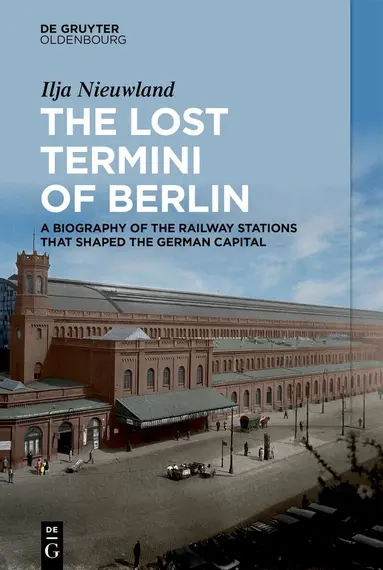
Lost Termini of Berlin
- Vikt 0,47 kg
385 krhos Bokus · exkl. frakt
114 kr skillnad mellan billigaste och dyraste butik i lager
Dubbelkollade priser
Jämför 3 butiker
- Bokus, 385 kr, frakt enligt butiken. Till butik (öppnas i ny flik)
I lagerFrakt: se butikenDubbelkollad 09:51
385 kr
Lägst
- Akademibokhandeln, 499 kr, frakt enligt butiken. Till butik (öppnas i ny flik)
I lagerFrakt: se butikenDubbelkollad 09:53
499 kr
- Adlibris, 342 kr, frakt enligt butiken. Till butik (öppnas i ny flik)
Slut i lagerFrakt: se butikenDubbelkollad 27 okt. 09:10
342 kr


Priser från butikernas flöden kan ha ändrats: det är priset hos butiken som gäller, så kontrollera det innan du handlar.
Prishistorik
Köp nu eller vänta?
Just nu kostar produkten 385 kr — 43 kr över det lägsta vi sett på 1 månad.
Under den tiden har det oftast legat runt 340–350 kr.
Pris idag
385 kr
- Lägst
- 342 kr
- Snitt
- 354 kr
- Högst
- 385 kr
| 2026-09-15 | 342 kr · Lägst hos Adlibris |
|---|---|
| 2026-09-19 | 342 kr · Lägst hos Bokus |
| 2026-09-23 | 342 kr · Lägst hos Adlibris |
| 2026-09-25 | 345 kr · Lägst hos Bokus |
| 2026-09-28 | 345 kr · Lägst hos Adlibris |
| 2026-09-30 | 345 kr · Lägst hos Bokus |
| 2026-10-05 | 342 kr · Lägst hos Adlibris |
| 2026-10-08 | 349 kr · Lägst hos Bokus |
| 2026-10-10 | 378 kr · Lägst hos Bokus |
| 2026-10-11 | 342 kr · Lägst hos Bokus |
| 2026-10-13 | 349 kr · Lägst hos Bokus |
| 2026-10-16 | 385 kr · Lägst hos Bokus |
| 2026-10-20 | 349 kr · Lägst hos Bokus |
| 2026-10-27 | 385 kr · Lägst hos Bokus |
Om produkten
Lost Termini of Berlin
Läs merLäs mindre
From the birth of Berlin's railway network to the time when the bombs of the Second World War and the concrete slabs of the Wall changed the city forever, the Prussian and later German capital counted eight major railway stations. These were beacons in the city: impressive monuments, magnificently built for the bygone rituals of arrival and departure, yet tightly woven into a distinct part of town. Railway stations are magical, meaningful places, allowing for escape as well as promise, nostalgia as well as novelty. They process all sorts of people, from well-to-do business types to unfortunates forced to live on the fringes of society. There is a nervous energy around them, created by those looking forward to their journey, others trying to get oriented in a place that is new to them, and some facing the drudgery of yet another commute. And if pre-World War 2 Berlin was anything, it was energetic. Building an adequate transport infrastructure for Europe's fastest-growing city proved to be a continuous challenge that required flexibility and adaptation and touched the city in ways that can still be seen today. This is the history of Berlin's railway stations, the people that used them, and the way the city was shaped by them.
Specifikationer
Fakta
- Vikt
- 0,47 kg
- GTIN
- 09783111381213
Uppgifter från tillverkare och butiker.