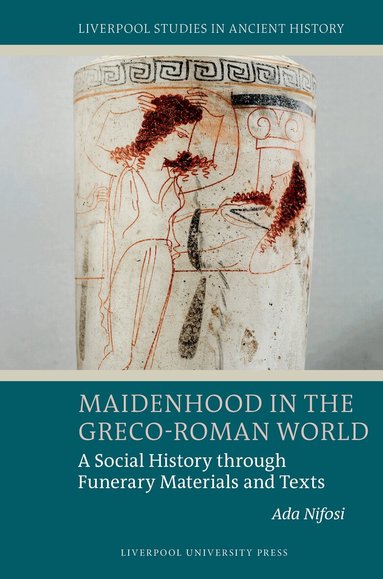
Maidenhood in the Greco-Roman World
2 312 krhos Bokus · exkl. frakt
697 kr skillnad mellan billigaste och dyraste butik i lager
Dubbelkollat idag
Jämför 2 butiker
- Bokus, 2 312 kr, frakt enligt butiken. Till butik (öppnas i ny flik)
I lagerFrakt: se butikenDubbelkollad 09:51
2 312 kr
Lägst
- Akademibokhandeln, 3 009 kr, frakt enligt butiken. Till butik (öppnas i ny flik)
I lagerFrakt: se butikenDubbelkollad 09:53
3 009 kr

Priser från butikernas flöden kan ha ändrats: det är priset hos butiken som gäller, så kontrollera det innan du handlar.
Prishistorik
Köp nu eller vänta?
Just nu kostar produkten 2 312 kr — 6 kr över det lägsta vi sett på 4 veckor.
Under den tiden har det oftast legat runt 2 580 kr.
Pris idag
2 312 kr
- Lägst
- 2 306 kr
- Snitt
- 2 546 kr
- Högst
- 3 359 kr
| 2026-09-19 | 3 359 kr · Lägst hos Akademibokhandeln |
|---|---|
| 2026-09-20 | 2 584 kr · Lägst hos Bokus |
| 2026-10-12 | 2 306 kr · Lägst hos Bokus |
| 2026-10-16 | 2 320 kr · Lägst hos Bokus |
| 2026-10-17 | 2 314 kr · Lägst hos Bokus |
| 2026-10-18 | 2 312 kr · Lägst hos Bokus |
Om produkten
Maidenhood in the Greco-Roman World
Läs merLäs mindre
Maidenhood in the Greco-Roman World offers the first comprehensive social history of maidenhood in the Graeco-Roman world, spanning the fifth century BC to the fourth century AD. Through an unprecedented comparative synthesis of archaeological case studies, epigraphic evidence, iconography, and literary sources, it explores how young women were perceived, commemorated, and socially constructed in death. At its core are forty-two carefully selected burial case studies from Greece, Italy, and Egypt. Rather than attempting an exhaustive catalogue, the book presents contextualised, well-excavated examples, combining analysis of grave goods, skeletal remains, and funerary assemblages with wider regional comparisons. These burials are read alongside funerary art, inscriptions, and ancient medical, legal, and literary texts to reconstruct the social meanings attached to maidenhood.The study argues that funerary contexts do not simply reveal the lives of girls, but the social gaze cast upon them, including expectations surrounding beauty, skills, piety, and marriage. By bringing together material and textual evidence across different regions and periods, the book highlights both shared traditions and local adaptations in commemorating girls who died before marriage.In doing so, it illuminates a crucial yet understudied transitional stage of life and demonstrates the centrality of maidenhood in Graeco-Roman social imagination.