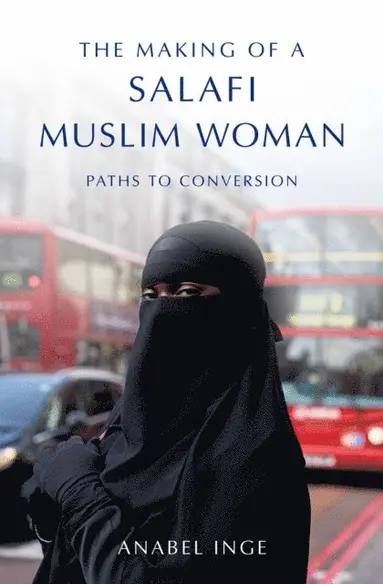
Making of a Salafi Muslim Woman
Dubbelkollade priser
Jämför 2 butiker
- Bokus, 257 kr, frakt enligt butiken. Till butik (öppnas i ny flik)
I lagerFrakt: se butikenDubbelkollad 04:17
257 kr
Lägst
- Adlibris, 276 kr, frakt enligt butiken. Till butik (öppnas i ny flik)
Slut i lagerFrakt: se butikenDubbelkollad 27 okt. 09:10
276 kr


Priser från butikernas flöden kan ha ändrats: det är priset hos butiken som gäller, så kontrollera det innan du handlar.
Prishistorik
Köp nu eller vänta?
Just nu kostar produkten 257 kr — 93 kr över det lägsta vi sett på 1 månad.
Under den tiden har det oftast legat runt 230–280 kr.
Pris idag
257 kr
- Lägst
- 164 kr
- Snitt
- 241 kr
- Högst
- 276 kr
| 2026-09-15 | 252 kr · Lägst hos Bokus |
|---|---|
| 2026-09-19 | 233 kr · Lägst hos Bokus |
| 2026-09-22 | 255 kr · Lägst hos Bokus |
| 2026-09-27 | 233 kr · Lägst hos Bokus |
| 2026-09-29 | 255 kr · Lägst hos Bokus |
| 2026-10-02 | 177 kr · Lägst hos Bokus |
| 2026-10-09 | 164 kr · Lägst hos Bokus |
| 2026-10-12 | 257 kr · Lägst hos Bokus |
| 2026-10-13 | 276 kr · Lägst hos Bokus |
| 2026-10-26 | 257 kr · Lägst hos Bokus |
Om produkten
Making of a Salafi Muslim Woman
Läs merLäs mindre
The spread of Salafism--often referred to as "Wahhabism"--in the West has intrigued and alarmed observers since the attacks of 9/11. Many see it as a fundamentalist interpretation of Islam that condones the subjugation of women and fuels Jihadist extremism. This view depicts Salafi women as the hapless victims of a fanatical version of Islam. Yet in Britain, growing numbers of educated women--often converts or from less conservative Muslim backgrounds-are actively choosing to embrace Salafism''s literalist beliefs and strict regulations, including heavy veiling, wifely obedience, and seclusion from non-related men. How do these young women reconcile such difficult demands with their desire for university education, fulfilling careers, and suitable husbands? How do their beliefs affect their love lives and other relationships? And why do they become Salafi in the first place?Anabel Inge has gained unprecedented access to Salafi women''s groups in the United Kingdom to provide the first in-depth account of their lives. Drawing on more than two years of ethnographic fieldwork in London, she examines why Salafism is attracting so many young Somalis, Afro-Caribbean converts, and others. But she also reveals the personal dilemmas they confront. This ground-breaking, lucid, and richly detailed book will be of vital interest to scholars, policy-makers, journalists, and general readers.