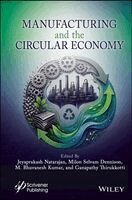
Manufacturing and the Circular Economy
2 143 krhos Bokus · exkl. frakt
646 kr skillnad mellan billigaste och dyraste butik i lager
Dubbelkollat idag
Jämför 2 butiker
- Bokus, 2 143 kr, frakt enligt butiken. Till butik (öppnas i ny flik)
I lagerFrakt: se butikenDubbelkollad 06:51
2 143 kr
Lägst
- Akademibokhandeln, 2 789 kr, frakt enligt butiken. Till butik (öppnas i ny flik)
I lagerFrakt: se butikenDubbelkollad 06:53
2 789 kr

Priser från butikernas flöden kan ha ändrats: det är priset hos butiken som gäller, så kontrollera det innan du handlar.
Prishistorik
Köp nu eller vänta?
Just nu kostar produkten 2 143 kr — 20 kr över det lägsta vi sett på 3 veckor.
Under den tiden har det oftast legat runt 2 130–2 150 kr.
Pris idag
2 143 kr
- Lägst
- 2 123 kr
- Snitt
- 2 166 kr
- Högst
- 2 759 kr
| 2026-09-25 | 2 759 kr · Lägst hos Akademibokhandeln |
|---|---|
| 2026-09-26 | 2 126 kr · Lägst hos Bokus |
| 2026-09-27 | 2 123 kr · Lägst hos Bokus |
| 2026-09-30 | 2 127 kr · Lägst hos Bokus |
| 2026-10-02 | 2 140 kr · Lägst hos Bokus |
| 2026-10-03 | 2 142 kr · Lägst hos Bokus |
| 2026-10-04 | 2 150 kr · Lägst hos Bokus |
| 2026-10-05 | 2 153 kr · Lägst hos Bokus |
| 2026-10-09 | 2 148 kr · Lägst hos Bokus |
| 2026-10-11 | 2 151 kr · Lägst hos Bokus |
| 2026-10-12 | 2 137 kr · Lägst hos Bokus |
| 2026-10-16 | 2 150 kr · Lägst hos Bokus |
| 2026-10-17 | 2 145 kr · Lägst hos Bokus |
| 2026-10-18 | 2 143 kr · Lägst hos Bokus |
Om produkten
Manufacturing and the Circular Economy
Läs merLäs mindre
By bridging cutting-edge academic research with real-world industry applications, this essential guide gives manufacturers, policymakers, and sustainability leaders the ultimate blueprint to shift from outdated models into profitable, future-proof circular manufacturing. The manufacturing sector is experiencing a significant change due to increasing environmental issues, limited resources, and changing regulations. For many years, industrial production has followed a straightforward economic model, often referred to as "take-make-dispose", that emphasizes mass production, brief product life spans, and resource-heavy processes. This method has resulted in excessive resource depletion, increased waste production, and harm to the environment. As industries look for ways to create more sustainable and resilient production systems, the circular economy model has become an attractive and practical option. The circular economy fundamentally changes the way we think about manufacturing by focusing on using resources more efficiently, reducing waste, and continuously reusing materials. Connecting academic research, industry applications, and policy directives, this book offers a comprehensive view of how circular economy principles can transform industrial production, boost economic resilience, and deliver lasting sustainability benefits. Industry experts provide in-depth looks at how to successfully incorporate circular economy strategies into manufacturing processes, aiming to improve sustainability, resource efficiency, and economic viability. The book explores essential concepts like circular design, closed-loop supply chains, remanufacturing, waste reduction, and sustainable procurement. It offers detailed conversations about digital technologies, such as artificial intelligence, the Internet of Things (IoT), and blockchain, as key drivers of circular manufacturing. It also looks into important aspects like energy efficiency, regulatory compliance, and investment strategies, providing a well-rounded grasp of the topic. This comprehensive resource is vital for manufacturers, policymakers, researchers, and sustainability experts looking to understand the intricacies of circular manufacturing.