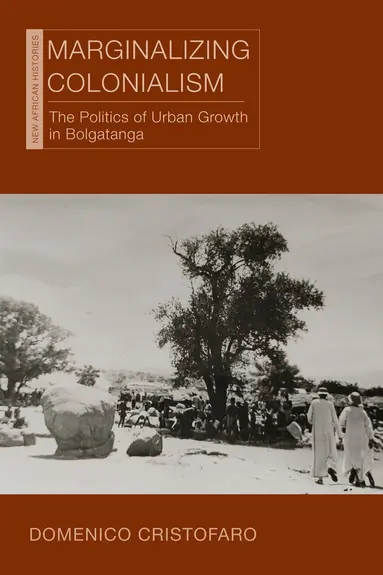
Marginalizing Colonialism
2 056 krhos Bokus · exkl. frakt
613 kr skillnad mellan billigaste och dyraste butik i lager
Dubbelkollat idag
Jämför 2 butiker
- Bokus, 2 056 kr, frakt enligt butiken. Till butik (öppnas i ny flik)
I lagerFrakt: se butikenDubbelkollad 04:51
2 056 kr
Lägst
- Akademibokhandeln, 2 669 kr, frakt enligt butiken. Till butik (öppnas i ny flik)
I lagerFrakt: se butikenDubbelkollad 04:53
2 669 kr

Priser från butikernas flöden kan ha ändrats: det är priset hos butiken som gäller, så kontrollera det innan du handlar.
Prishistorik
Köp nu eller vänta?
Just nu kostar produkten 2 056 kr — 78 kr över det lägsta vi sett på 1 månad.
Under den tiden har det oftast legat runt 1 980–2 060 kr.
Pris idag
2 056 kr
- Lägst
- 1 978 kr
- Snitt
- 2 005 kr
- Högst
- 2 056 kr
| 2026-09-15 | 1 978 kr · Lägst hos Bokus |
|---|---|
| 2026-10-12 | 2 056 kr · Lägst hos Bokus |
| 2026-10-23 | Ingen butik hade produkten i lager |
| 2026-10-30 | 2 056 kr · Lägst hos Bokus |
Om produkten
Marginalizing Colonialism
Läs merLäs mindre
Marginalizing Colonialism offers a social, political, and spatial history of Bolgatanga, a northern Ghanaian town whose colonial-era urban development has been largely overlooked in African historiography. Covering the late nineteenth century through the 1940s, the book traces how this settlement-long characterized as a remote hinterland of the British Empire-emerged as a commercial and political center in the region. Rather than depicting urbanization as an imperial project, it reveals how African actors actively shaped Bolgatanga's growth and repeatedly marginalized, redirected, and evaded colonial authority.The narrative follows Bolgatanga's transformation from a dispersed settlement organized around kinship, ritual geographies, and earth shrines into a dynamic urban hub integrated into regional trade networks. Central to this shift were new land tenure systems, commercial expansion, and changing spatial practices. By the 1930s and 1940s, trade in kola, groundnuts, livestock, and other goods surged, stimulated by new roads and increased mobility. Population growth converted farmland into leased plots, permanent buildings replaced older compounds, and areas around the market became focal points of economic and social life.These changes were driven not by the colonial state but rather by local negotiations and strategic adaptations. Chiefs, earth priests, merchants, and migrant traders mediated and reshaped colonial policies, while missionaries and settlers concluded land agreements beyond official oversight. Roads and marketplaces, planned through negotiations between colonial officials and local chiefs and built largely through African labor, became central infrastructures of local economic life. Even as colonial administrators sought to codify land tenure and regulate commerce, their influence remained largely nominal-a background presence in a story propelled by African initiative.Drawing on archival documents, oral histories, and unpublished manuscripts by local intellectuals, Marginalizing Colonialism provides the first comprehensive urban history of Bolgatanga. It challenges dominant narratives in African colonial and urban historiography by exposing the silences of the colonial archive and highlighting the significance of medium-sized towns as arenas of negotiation and creativity. Ultimately, the book argues that Bolgatanga's urbanization was a locally driven process that redefined power, space, and governance-leaving a legacy that continues to shape the city's identity and regional role today.