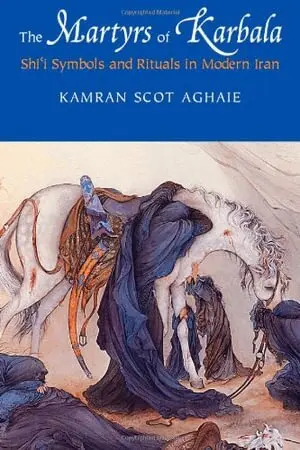
Martyrs of Karbala
- Vikt 0,35 kg
Bra pris nuLägsta priset på 1 månad
495 kr499 kr−0% senaste veckanhos Bokus · exkl. frakt
Jämfört med det lägsta pris vi sett de 30 dagarna före sänkningen.
144 kr skillnad mellan billigaste och dyraste butik i lager
Dubbelkollat idag
Jämför 2 butiker
- Bokus, 495 kr, frakt enligt butiken. Till butik (öppnas i ny flik)
I lagerFrakt: se butikenDubbelkollad 20:51
495 kr
Lägst
- Akademibokhandeln, 639 kr, frakt enligt butiken. Till butik (öppnas i ny flik)
I lagerFrakt: se butikenDubbelkollad 20:53
639 kr

Priser från butikernas flöden kan ha ändrats: det är priset hos butiken som gäller, så kontrollera det innan du handlar.
Prishistorik
Köp nu eller vänta?
Just nu kostar produkten 495 kr — det lägsta vi sett på 1 månad.
Under den tiden har det oftast legat runt 500–520 kr.
Pris idag
495 kr
- Lägst
- 495 kr
- Snitt
- 505 kr
- Högst
- 517 kr
| 2026-09-15 | 499 kr · Lägst hos Bokus |
|---|---|
| 2026-10-10 | 517 kr · Lägst hos Bokus |
| 2026-10-26 | 495 kr · Lägst hos Bokus |
Om produkten
Martyrs of Karbala
Läs merLäs mindre
This innovative study examines patterns of change in Shi'i symbols and rituals over the past two centuries to reveal how modernization has influenced the societal, political, and religious culture of Iran. Shi'is, who support the Prophet Mohammad's progeny as his successors in opposition to the Sunni caliphate tradition, make up 10 to 15 percent of the world's Muslim population, roughly half of whom live in Iran. Throughout the early history of the Islamic Middle East, the Sunnis have been associated with the state and the ruling elite, while Shi'is have most often represented the political opposition and have had broad appeal among the masses. Moharram symbols and rituals commemorate the Battle of Karbala in 680 CE, in which the Prophet Mohammad's grandson Hoseyn and most of his family and supporters were massacred by the troops of the Umayyad caliph Yazid.Moharram symbols and rituals are among the most pervasive and popular aspects of Iranian culture and society. This book traces patterns of continuity and change of Moharran symbols and rituals in three aspects of Iranian life: the importance of these rituals in promoting social bonds, status, identities, and ideals; ways in which the three major successive regimes (Qujars, Pahlavis, and the Islamic Republic), have either used these rituals to promote their legitimacy, or have suppressed them because they viewed them as a potential political threat; and the uses of Moharram symbolism by opposition groups interested in overthrowing the regime.While the patterns of government patronage have been radically discontinuous over the past two centuries, the roles of these rituals in popular society and culture have been relatively continuous or have evolved independently of the state. The political uses of modern-day rituals and the enduring symbolism of the Karbala narratives continue today.
Specifikationer
Fakta
- Vikt
- 0,35 kg
- GTIN
- 09780295984551
Uppgifter från tillverkare och butiker.