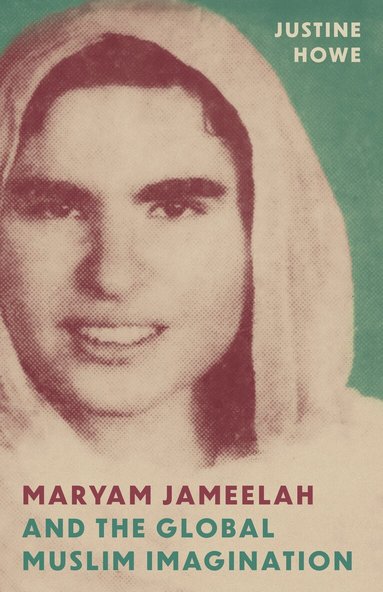
Maryam Jameelah and the Global Muslim Imagination
1 713 krhos Bokus · exkl. frakt
516 kr skillnad mellan billigaste och dyraste butik i lager
Dubbelkollat idag
Jämför 2 butiker
- Bokus, 1 713 kr, frakt enligt butiken. Till butik (öppnas i ny flik)
I lagerFrakt: se butikenDubbelkollad 17:51
1 713 kr
Lägst
- Akademibokhandeln, 2 229 kr, frakt enligt butiken. Till butik (öppnas i ny flik)
I lagerFrakt: se butikenDubbelkollad 17:53
2 229 kr

Priser från butikernas flöden kan ha ändrats: det är priset hos butiken som gäller, så kontrollera det innan du handlar.
Prishistorik
Köp nu eller vänta?
Just nu kostar produkten 1 713 kr — 65 kr över det lägsta vi sett på 4 veckor.
Under den tiden har det oftast legat runt 1 650–1 710 kr.
Pris idag
1 713 kr
- Lägst
- 1 648 kr
- Snitt
- 1 693 kr
- Högst
- 2 139 kr
| 2026-09-19 | 2 139 kr · Lägst hos Akademibokhandeln |
|---|---|
| 2026-09-20 | 1 648 kr · Lägst hos Bokus |
| 2026-10-06 | 1 713 kr · Lägst hos Bokus |
Om produkten
Maryam Jameelah and the Global Muslim Imagination
Läs merLäs mindre
The life and work of an American Jewish convert to Islam who became a leading voice of the global Islamic Revival, explored through the lens of emotion in transnational religious identityMaryam Jameelah (1934-2012)-born Margaret Marcus in White Plains, New York-followed an unlikely journey, from comfortable suburban childhood to influential voice of the twentieth-century global Islamic Revival. Jameelah's more than twenty books and pamphlets, translated into a dozen languages, were notable for their unrelenting critique of modernity and arguments for the superiority of Islam in opposition to the West. In this exploration of her life and work, Justine Howe shows how Jameelah harnessed negative emotions-what Howe calls an "antimodern affect"-to call attention to what she saw as the catastrophes wrought by materialism and secularism. For Jameelah, galvanizing these emotions formed the basis of global Muslim solidarity that could be mobilized for a reinvigorated Islamic future.Tracing Jameelah's successive incarnations-from Reform Jew to highly mobile spiritual seeker and finally to fervent Muslim polemicist-Howe analyzes how women, gender, and family became the central nodes of Jameelah's vision. Projecting herself as an embodiment of Muslim femininity as she pursued a career as a public intellectual, Jameelah subverted the very boundaries and prescriptions she sought to impose on others. Howe's exploration of the multivalent threads that animated Jameelah's religious imagination reveals unexpected entanglements of American Judaism, global Islam, feminism, and anticolonialism.