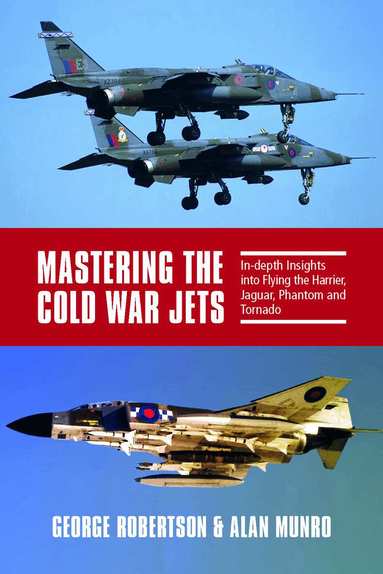
Mastering the Cold War Jets
265 krhos Bokus · exkl. frakt
84 kr skillnad mellan billigaste och dyraste butik i lager
Dubbelkollat idag
Jämför 2 butiker
- Bokus, 265 kr, frakt enligt butiken. Till butik (öppnas i ny flik)
I lagerFrakt: se butikenDubbelkollad 22:51
265 kr
Lägst
- Akademibokhandeln, 349 kr, frakt enligt butiken. Till butik (öppnas i ny flik)
I lagerFrakt: se butikenDubbelkollad 22:53
349 kr

Priser från butikernas flöden kan ha ändrats: det är priset hos butiken som gäller, så kontrollera det innan du handlar.
Prishistorik
Köp nu eller vänta?
Pris idag
265 kr
- Lägst
- 264 kr
- Snitt
- 271 kr
- Högst
- 349 kr
| 2026-10-03 | 349 kr · Lägst hos Akademibokhandeln |
|---|---|
| 2026-10-04 | 265 kr · Lägst hos Bokus |
| 2026-10-12 | 264 kr · Lägst hos Bokus |
| 2026-10-16 | 265 kr · Lägst hos Bokus |
Om produkten
Mastering the Cold War Jets
Läs merLäs mindre
These thought-provoking first-hand accounts come from two friends, George Robertson and Alan Munro, who joined the RAF together on the same day in 1963, went through basic and advanced flying training together and then followed two parallel but different careers. As the book is written jointly, you get two different perspectives on the main RAF front-line roles in the Cold War. They describe going through the RAF pilot training system in the 1960s, the aircraft they flew, and the bases they operated from. After completing advanced flying training on the Folland Gnat at RAF Valley in Anglesey they followed different paths from then on.George went to the Canberra Conversion Unit (OCU) at RAF Bassingbourne and then to RAF Luqa in Malta to fly the Canberra PR9 in the reconnaissance role. Alan to RAF Leuchars to convert on to the Gloster Javelin. As the years progressed, they both gained experience in most of the front-line aircraft and roles. George flew the Phantom FGR2 from its early days in service in the strike-attack roles with three different Phantom squadrons as both squadron pilot and flight commander. After his Javelin tour, Alan became an instructor on the Jet Provost but later came back to the front line in the air-defence role. They each have interesting views on the Phantom's strengths and weaknesses in both roles.After completing RAF Staff College, George did a ground tour in the Ministry of Defence Operational Requirements Branch in the early days of the Tornado development. He experienced at first hand the RAF procurement system of the day and the pros and cons of a trinational programme. Alan flew the Harrier and the Tornado and was an instructor on the NATO tactical leadership programme. George took over 6 Squadron at RAF Coltishall on the Jaguar in its early years of squadron service. He took the Jaguar trans-Atlantic on two occasions to the Red Flag and Maple Flag exercises.After leaving the RAF they joined different airlines and continued their flying careers, having to make the transition from single-seat fighter operations to operating a large aircraft with passengers and crew. They both became specialists, George as a type rating examiner and human factors instructor and Alan as a consultant on airline safety and regulatory matters. The difficulties in transferring to civilian flying from military and the authors' comparative experiences are discussed in detail. Mastering The Cold War Jets is both informative, entertaining and fascinating to read.