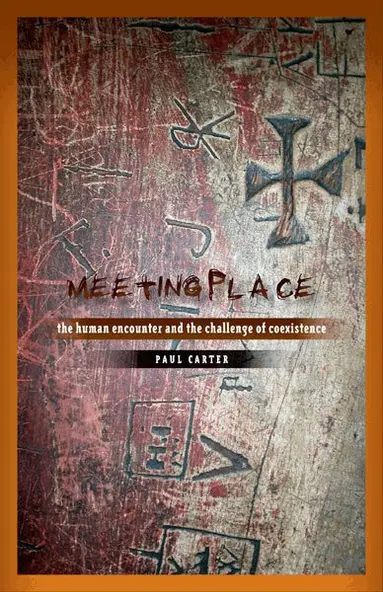
Meeting Place
302 krhos Bokus · exkl. frakt
87 kr skillnad mellan billigaste och dyraste butik i lager
Dubbelkollat idag
Jämför 2 butiker
- Bokus, 302 kr, frakt enligt butiken. Till butik (öppnas i ny flik)
I lagerFrakt: se butikenDubbelkollad 05:51
302 kr
Lägst
- Akademibokhandeln, 389 kr, frakt enligt butiken. Till butik (öppnas i ny flik)
I lagerFrakt: se butikenDubbelkollad 04:53
389 kr

Priser från butikernas flöden kan ha ändrats: det är priset hos butiken som gäller, så kontrollera det innan du handlar.
Prishistorik
Köp nu eller vänta?
Just nu kostar produkten 302 kr — 4 kr över det lägsta vi sett på 1 månad.
Under den tiden har det oftast legat runt 300 kr.
Pris idag
302 kr
- Lägst
- 298 kr
- Snitt
- 300 kr
- Högst
- 303 kr
| 2026-09-15 | 298 kr · Lägst hos Bokus |
|---|---|
| 2026-09-18 | 300 kr · Lägst hos Bokus |
| 2026-09-19 | 299 kr · Lägst hos Bokus |
| 2026-09-25 | 298 kr · Lägst hos Bokus |
| 2026-10-03 | 301 kr · Lägst hos Bokus |
| 2026-10-04 | 302 kr · Lägst hos Bokus |
| 2026-10-09 | 301 kr · Lägst hos Bokus |
| 2026-10-12 | 300 kr · Lägst hos Bokus |
| 2026-10-16 | 302 kr · Lägst hos Bokus |
| 2026-10-22 | 300 kr · Lägst hos Bokus |
| 2026-10-24 | 301 kr · Lägst hos Bokus |
| 2026-10-28 | 303 kr · Lägst hos Bokus |
| 2026-10-29 | 302 kr · Lägst hos Bokus |
Om produkten
Meeting Place
Läs merLäs mindre
In this remarkable and often dazzling book, Paul Carter explores the conditions for sociability in a globalized future. He argues that we make many assumptions about communication but overlook barriers to understanding between strangers as well as the importance of improvisation in overcoming these obstacles to meeting. While disciplines such as sociology, legal studies, psychology, political theory, and even urban planning treat meeting as a good in its own right, they fail to provide a model of what makes meeting possible and worth pursuing: a yearning for encounter.The volume's central narrative-between Northern cultural philosophers and Australian societies-traverses the troubled history of misinterpretation that is characteristic of colonial cross-cultural encounter. As he brings the literature of Indigenous and non-Indigenous anthropological research into dialogue with Western approaches of conceptualizing sociability, Carter makes a startling discovery: that meeting may not be desirable and, if it is, its primary objective may be to negotiate a future of non-meeting. To explain the phenomenon of encounter, Carter performs it in differing scales, spaces, languages, tropes, and forms of knowledge, staging in the very language of the book what he calls "passages." In widely varying contexts, these passages posit the disjunction of Greco-Roman and Indigenous languages, codes, theatrics of power, social systems, and visions of community. In an era of new forms of technosocialization, Carter offers novel ways of presenting the philosophical dimensions of waiting, meeting, and non-meeting.