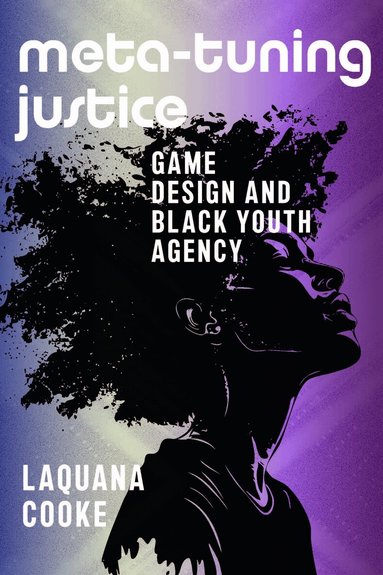
Meta-Tuning Justice
Dubbelkollat idag
Jämför 2 butiker
- Bokus, 1 084 kr, frakt enligt butiken. Till butik (öppnas i ny flik)
I lagerFrakt: se butikenDubbelkollad 00:51
1 084 kr
Lägst
- Akademibokhandeln, 1 409 kr, frakt enligt butiken. Till butik (öppnas i ny flik)
Slut i lagerFrakt: se butikenDubbelkollad 00:53
1 409 kr

Priser från butikernas flöden kan ha ändrats: det är priset hos butiken som gäller, så kontrollera det innan du handlar.
Prishistorik
Köp nu eller vänta?
Just nu kostar produkten 1 084 kr — 6 kr över det lägsta vi sett på 2 veckor.
Under den tiden har det oftast legat runt 1 080–1 090 kr.
Pris idag
1 084 kr
- Lägst
- 1 078 kr
- Snitt
- 1 105 kr
- Högst
- 1 399 kr
| 2026-10-01 | 1 399 kr · Lägst hos Akademibokhandeln |
|---|---|
| 2026-10-02 | 1 078 kr · Lägst hos Bokus |
| 2026-10-06 | Ingen butik hade produkten i lager |
| 2026-10-09 | 1 087 kr · Lägst hos Bokus |
| 2026-10-10 | 1 085 kr · Lägst hos Bokus |
| 2026-10-12 | 1 078 kr · Lägst hos Bokus |
| 2026-10-16 | 1 084 kr · Lägst hos Bokus |
Om produkten
Meta-Tuning Justice
Läs merLäs mindre
Exploring how Black youth are reshaping game design to dismantle stereotypes and spark social change In the early 2000s, digital gaming rose to cultural and economic prominence. Communities of color, however, and especially Black youth, were largely excluded from gaming culture. The rare Black character in games tended to reinforce stereotypes, while racial bias was often surreptitiously embedded in game design platforms-what decolonial scholars call "whitestream" computing. Progressive game design education initiatives and new technologies have recently begun to dismantle these barriers. Yet, because biases remain, historically excluded young people still need to actively reconfigure these digital spaces to fully develop and convey their own perspectives. In Meta-Tuning Justice, digital rhetoric scholar Laquana Cooke explores how Black youth express cultural identity and challenge dominant narratives through innovative game design. Cooke introduces the Transformative Constructionist Learning (TCL) paradigm and its core theory of "meta-tuning"-the idea that students are better able to adjust to new challenges through trial-and-error and experimentation in educational environments that correspondingly adjust to their evolving learning needs. In contrast to traditional education practices, which assume the neutrality of technology, Cooke approaches it as a tool for social transformation. Drawing on the TCL paradigm, she explores how the unique cultural algorithms and expressions (like popping and locking dance forms) that inform the programming and designs of Black youth represent a powerful form of resistance and creation. Through rich ethnographic case studies across multiple educational settings, and with gaming as its experimental center, this book presents a compelling vision of how TCL and meta-tuning can help make technologies more equitable. Cooke's innovative study offers insights crucial to scholars and practitioners in game studies, Science and Technology Studies, STEM education, and racial equity in digital learning.