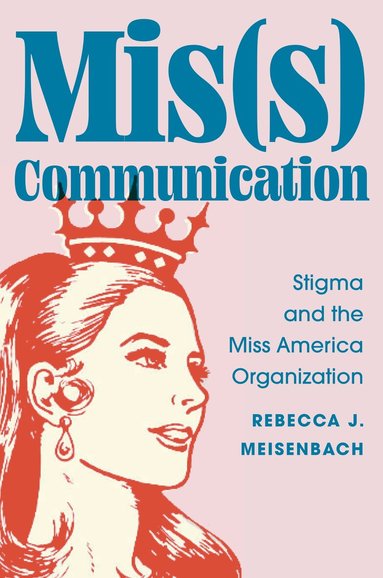
Mis(s) Communication
Dubbelkollat idag
Jämför 2 butiker
- Bokus, 1 395 kr, frakt enligt butiken. Till butik (öppnas i ny flik)
I lagerFrakt: se butikenDubbelkollad 19:51
1 395 kr
Lägst
- Akademibokhandeln, 1 809 kr, frakt enligt butiken. Till butik (öppnas i ny flik)
Slut i lagerFrakt: se butikenDubbelkollad 19:53
1 809 kr

Priser från butikernas flöden kan ha ändrats: det är priset hos butiken som gäller, så kontrollera det innan du handlar.
Prishistorik
Köp nu eller vänta?
Just nu kostar produkten 1 395 kr — 17 kr över det lägsta vi sett på 4 veckor.
Under den tiden har det oftast legat runt 1 380–1 390 kr.
Pris idag
1 395 kr
- Lägst
- 1 378 kr
- Snitt
- 1 400 kr
- Högst
- 1 799 kr
| 2026-09-18 | 1 799 kr · Lägst hos Akademibokhandeln |
|---|---|
| 2026-09-19 | 1 384 kr · Lägst hos Bokus |
| 2026-09-20 | 1 381 kr · Lägst hos Bokus |
| 2026-09-23 | 1 383 kr · Lägst hos Bokus |
| 2026-09-24 | 1 382 kr · Lägst hos Bokus |
| 2026-09-25 | 1 379 kr · Lägst hos Bokus |
| 2026-09-27 | 1 378 kr · Lägst hos Bokus |
| 2026-09-30 | 1 380 kr · Lägst hos Bokus |
| 2026-10-02 | 1 389 kr · Lägst hos Bokus |
| 2026-10-03 | 1 390 kr · Lägst hos Bokus |
| 2026-10-08 | 1 397 kr · Lägst hos Bokus |
| 2026-10-10 | 1 394 kr · Lägst hos Bokus |
| 2026-10-11 | 1 391 kr · Lägst hos Bokus |
| 2026-10-12 | 1 386 kr · Lägst hos Bokus |
| 2026-10-16 | 1 395 kr · Lägst hos Bokus |
Om produkten
Mis(s) Communication
Läs merLäs mindre
Mis(s) Communication: Stigma and the Miss America Organization explores the one-hundred-year history of the Miss America Organization (MAO) as a site of stigma management. Through five years of ethnographic, archival, and interview-based research, Rebecca J. Meisenbach shows how pageant participation is both valorized and stigmatized-making MAO a key lens for studying stigma as a dynamic, power-laden communication process. The book examines stigma across individual, organizational, and societal levels, focusing on moments like Rule Seven, which once barred nonwhite participants, and the 1968 protest by the New York Radical Women alongside the first Miss Black America pageant. Meisenbach also investigates how contestants navigate stigma tied to intelligence, body image, and the sexualization of women. She analyzes MAO's 2018 elimination of the swimsuit competition as a stigma management move and its recent shift to a for-profit model under Miss America Opportunity. The book ultimately argues for understanding stigma as communicative and deeply intersectional.