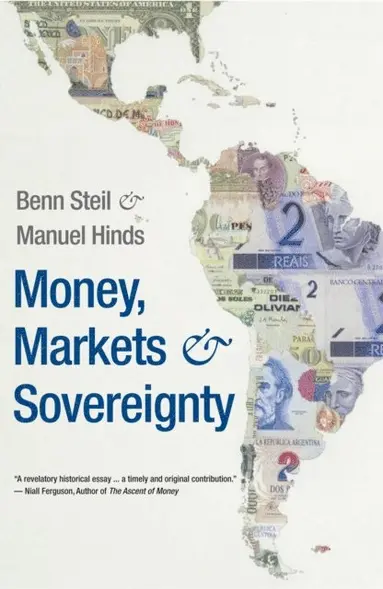
Money, Markets, and Sovereignty
Dubbelkollat idag
Jämför 1 butik
- Bokus, 191 kr, frakt enligt butiken. Till butik (öppnas i ny flik)
I lagerFrakt: se butikenDubbelkollad 07:51
191 kr
Lägst

Priser från butikernas flöden kan ha ändrats: det är priset hos butiken som gäller, så kontrollera det innan du handlar.
Prishistorik
Köp nu eller vänta?
Just nu kostar produkten 191 kr — 176 kr över det lägsta vi sett på 1 månad.
Under den tiden har det oftast legat runt 190 kr.
Pris idag
191 kr
- Lägst
- 15 kr
- Snitt
- 195 kr
- Högst
- 294 kr
| 2026-09-15 | 187 kr · Lägst hos Bokus |
|---|---|
| 2026-09-16 | 146 kr · Lägst hos Bokus |
| 2026-09-20 | 187 kr · Lägst hos Bokus |
| 2026-09-30 | 288 kr · Lägst hos Bokus |
| 2026-10-08 | 294 kr · Lägst hos Bokus |
| 2026-10-11 | 191 kr · Lägst hos Bokus |
| 2026-10-13 | 15 kr · Lägst hos Bokus |
| 2026-10-16 | 150 kr · Lägst hos Bokus |
| 2026-10-20 | 191 kr · Lägst hos Bokus |
Om produkten
Money, Markets, and Sovereignty
Läs merLäs mindre
Winner of the 2010 Hayek Book Prize given by the Manhattan Institute"Money, Markets and Sovereignty is a surprisingly easy read, given the complicated issues covered. In it, Mr. Steil and Mr. Hinds consistently challenge today''s statist nostrums."-Doug Bandow, The Washington TimesIn this keenly argued book, Benn Steil and Manuel Hinds offer the most powerful defense of economic liberalism since F. A. Hayek published The Road to Serfdom more than sixty years ago. The authors present a fascinating intellectual history of monetary nationalism from the ancient world to the present and explore why, in its modern incarnation, it represents the single greatest threat to globalization.Steil and Hinds describe the current state of international economic relations as both unusual and precarious. Eras of economic protectionism have historically coincided with monetary nationalism, while eras of liberal trade have been accompanied by a universal monetary standard. But today, the authors show, an unprecedentedly liberal global trade regime operates side by side with the most extreme doctrine of monetary nationalism ever contrived-a situation bound to trigger periodic crises. Steil and Hinds call for a revival of the political and economic thinking that underlay earlier great periods of globalization, thinking that is increasingly under threat by more recent ideas about what sovereignty means.