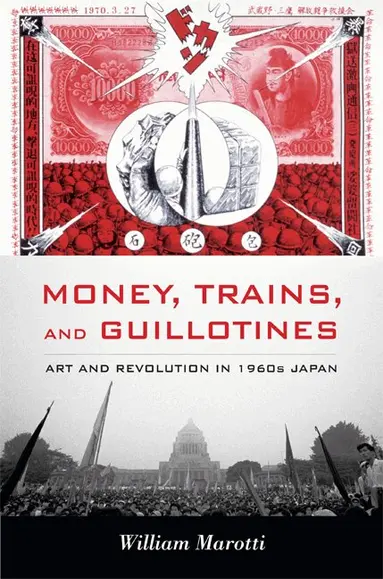
Money, Trains, and Guillotines
- Vikt 0,87 kg
514 krhos Bokus · exkl. frakt
155 kr skillnad mellan billigaste och dyraste butik i lager
Dubbelkollat idag
Jämför 2 butiker
- Bokus, 514 kr, frakt enligt butiken. Till butik (öppnas i ny flik)
I lagerFrakt: se butikenDubbelkollad 12:51
514 kr
Lägst
- Akademibokhandeln, 669 kr, frakt enligt butiken. Till butik (öppnas i ny flik)
I lagerFrakt: se butikenDubbelkollad 12:53
669 kr

Priser från butikernas flöden kan ha ändrats: det är priset hos butiken som gäller, så kontrollera det innan du handlar.
Prishistorik
Köp nu eller vänta?
Just nu kostar produkten 514 kr — 7 kr över det lägsta vi sett på 1 månad.
Under den tiden har det oftast legat runt 510 kr.
Pris idag
514 kr
- Lägst
- 507 kr
- Snitt
- 511 kr
- Högst
- 515 kr
| 2026-09-15 | 507 kr · Lägst hos Bokus |
|---|---|
| 2026-09-18 | 510 kr · Lägst hos Bokus |
| 2026-09-19 | 509 kr · Lägst hos Bokus |
| 2026-09-20 | 508 kr · Lägst hos Bokus |
| 2026-09-23 | 509 kr · Lägst hos Bokus |
| 2026-09-25 | 507 kr · Lägst hos Bokus |
| 2026-09-30 | 508 kr · Lägst hos Bokus |
| 2026-10-02 | 511 kr · Lägst hos Bokus |
| 2026-10-04 | 513 kr · Lägst hos Bokus |
| 2026-10-11 | 512 kr · Lägst hos Bokus |
| 2026-10-12 | 510 kr · Lägst hos Bokus |
| 2026-10-16 | 512 kr · Lägst hos Bokus |
| 2026-10-18 | 511 kr · Lägst hos Bokus |
| 2026-10-24 | 512 kr · Lägst hos Bokus |
| 2026-10-25 | 513 kr · Lägst hos Bokus |
| 2026-10-28 | 515 kr · Lägst hos Bokus |
| 2026-10-29 | 514 kr · Lägst hos Bokus |
Om produkten
Money, Trains, and Guillotines
Läs merLäs mindre
During the 1960s a group of young artists in Japan challenged official forms of politics and daily life through interventionist art practices. William Marotti situates this phenomenon in the historical and political contexts of Japan after the Second World War and the international activism of the 1960s. The Japanese government renewed its Cold War partnership with the United States in 1960, defeating protests against a new security treaty through parliamentary action and the use of riot police. Afterward, the government promoted a depoliticized everyday world of high growth and consumption, creating a sanitized national image to present in the Tokyo Olympics of 1964. Artists were first to challenge this new political mythology. Marotti examines their political art, and the state's aggressive response to it. He reveals the challenge mounted in projects such as Akasegawa Genpei's 1,000-yen prints, a group performance on the busy Yamanote train line, and a plan for a giant guillotine in the Imperial Plaza. Focusing on the annual Yomiuri IndÉpendant exhibition, he demonstrates how artists came together in a playful but powerful critical art, triggering judicial and police response. Money, Trains, and Guillotines expands our understanding of the role of art in the international 1960s, and of the dynamics of art and policing in Japan.
Specifikationer
Fakta
- Vikt
- 0,87 kg
- GTIN
- 09780822349808
Uppgifter från tillverkare och butiker.