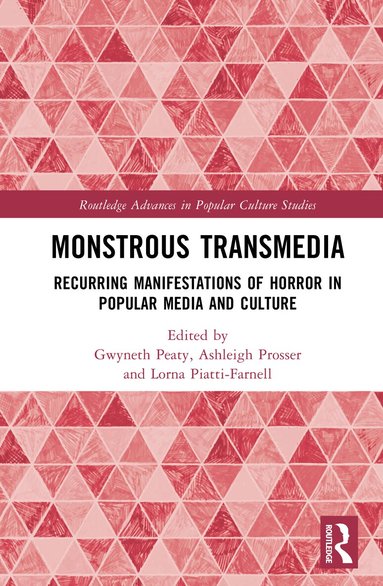
Monstrous Transmedia
2 588 krhos Bokus · exkl. frakt
781 kr skillnad mellan billigaste och dyraste butik i lager
Dubbelkollat idag
Jämför 2 butiker
- Bokus, 2 588 kr, frakt enligt butiken. Till butik (öppnas i ny flik)
I lagerFrakt: se butikenDubbelkollad 05:51
2 588 kr
Lägst
- Akademibokhandeln, 3 369 kr, frakt enligt butiken. Till butik (öppnas i ny flik)
I lagerFrakt: se butikenDubbelkollad 05:53
3 369 kr

Priser från butikernas flöden kan ha ändrats: det är priset hos butiken som gäller, så kontrollera det innan du handlar.
Prishistorik
Köp nu eller vänta?
Pris idag
2 588 kr
- Lägst
- 2 588 kr
- Snitt
- 2 848 kr
- Högst
- 3 369 kr
| 2026-10-15 | 3 369 kr · Lägst hos Akademibokhandeln |
|---|---|
| 2026-10-16 | 2 588 kr · Lägst hos Bokus |
Om produkten
Monstrous Transmedia
Läs merLäs mindre
This book examines how twenty-first-century horror narratives are shaped by transmedia storytelling, digital convergence, and mediated intertextuality. Contemporary storytelling is increasingly participatory, multimodal, and intermedial. As a result, it might be tempting to argue that we are witnessing an entirely new set of horrors emerging in today's digitised world. Despite the innovations brought about by artificial intelligence, digital connectivity and social media, this book argues that today's horror narratives are deeply rooted in historical and cultural discourses. Age-old fears are being reimagined in a new media landscape that is both global and deeply personal. This collection offers insights into how horror narratives are evolving across various media platforms including film, television, video games, and social media such as TikTok and YouTube. It also explores the lived reality of communities who engage with horror as a cultural identity and practice, considering how fashion, make-up, and costuming operate as their own forms of transmedia. These chapters examine the relationship between media, culture, and technology, revealing how digital culture reshapes traditional horror motifs and influences social norms. Readers will gain a deeper understanding of the connections between new storytelling practices and established genres, as well as how these narratives reflect contemporary societal fears and desires. This book will be valuable for scholars of media studies, fan studies, game studies, the Gothic, and horror research. By addressing both emerging technologies and historical representations of horror, the collection provides critical perspectives for academics interested in the intersections of media, popular culture, identity, community, and horror. The interdisciplinary approach will appeal to those studying screen studies, sociology, media representation, and cultural practices, offering new trends and insights within the evolving field of horror studies.