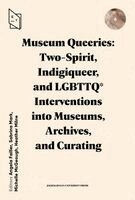
Museum Queeries: Two-Spirit, Indigiqueer, and LGBTTQ* Interventions into Museums, Archives, and Curating
617 krhos Bokus · exkl. frakt
182 kr skillnad mellan billigaste och dyraste butik i lager
Dubbelkollat idag
Jämför 2 butiker
- Bokus, 617 kr, frakt enligt butiken. Till butik (öppnas i ny flik)
I lagerFrakt: se butikenDubbelkollad 01:51
617 kr
Lägst
- Akademibokhandeln, 799 kr, frakt enligt butiken. Till butik (öppnas i ny flik)
I lagerFrakt: se butikenDubbelkollad 01:53
799 kr

Priser från butikernas flöden kan ha ändrats: det är priset hos butiken som gäller, så kontrollera det innan du handlar.
Prishistorik
Köp nu eller vänta?
Just nu kostar produkten 617 kr — 218 kr över det lägsta vi sett på 3 veckor.
Under den tiden har det oftast legat runt 600–620 kr.
Pris idag
617 kr
- Lägst
- 399 kr
- Snitt
- 597 kr
- Högst
- 617 kr
| 2026-09-26 | 399 kr · Lägst hos Akademibokhandeln |
|---|---|
| 2026-09-27 | 596 kr · Lägst hos Bokus |
| 2026-10-09 | 617 kr · Lägst hos Bokus |
Om produkten
Museum Queeries: Two-Spirit, Indigiqueer, and LGBTTQ* Interventions into Museums, Archives, and Curating
Läs merLäs mindre
This book explores Two-Spirit and LGBTTQ* contributions to and interventions in museums and museum studies, both as a means of addressing structural exclusions and of opening new modes of productive inquiry and activism. Building on the inroads that have been made into existing museological practice and scholarship, the collection brings new voices and concerns to the field. For the contributors to this volume, "queering the museum" is not only about addressing representations of gender and sexuality, but also challenging white privilege, racism, and settler colonialism among other structures of oppression as they operate alongside and with heteronormativity, homophobia, and transphobia in and beyond museums, archives, and galleries. To challenge these norms in the context of museums and other knowledge producing institutions means that "queering" must also, simultaneously and inextricably, be decolonial. That is, queering and decolonizing are inseparable strategies if we understand that heteronormativity and gender binaries are constructions that stem from colonial logics and are upheld by colonial institutions. The book features essays by artists, curators, and scholars-emerging and established-from a range of disciplines including Art History, Cultural Studies, Curatorial Studies, English, Indigenous Studies, Museum Studies, and Women's and Gender Studies.