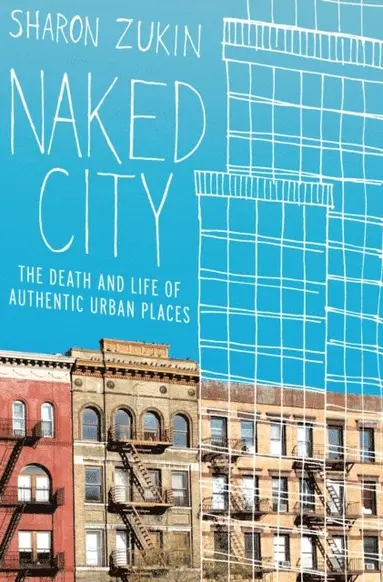
Naked City
Dubbelkollat idag
Jämför 1 butik
- Bokus, 235 kr, frakt enligt butiken. Till butik (öppnas i ny flik)
I lagerFrakt: se butikenDubbelkollad 08:51
235 kr
Lägst

Priser från butikernas flöden kan ha ändrats: det är priset hos butiken som gäller, så kontrollera det innan du handlar.
Prishistorik
Köp nu eller vänta?
Just nu kostar produkten 235 kr — 85 kr över det lägsta vi sett på 1 månad.
Under den tiden har det oftast legat runt 150–240 kr.
Pris idag
235 kr
- Lägst
- 150 kr
- Snitt
- 212 kr
- Högst
- 235 kr
| 2026-09-15 | 230 kr · Lägst hos Bokus |
|---|---|
| 2026-09-29 | 150 kr · Lägst hos Bokus |
| 2026-10-09 | 153 kr · Lägst hos Bokus |
| 2026-10-11 | 235 kr · Lägst hos Bokus |
Om produkten
Naked City
Läs merLäs mindre
As cities have gentrified, educated urbanites have come to prize what they regard as "authentic" urban life: aging buildings, art galleries, small boutiques, upscale food markets, neighborhood old-timers, funky ethnic restaurants, and old, family-owned shops. These signify a place''s authenticity, in contrast to the bland standardization of the suburbs and exurbs. But as Sharon Zukin shows in Naked City, the rapid and pervasive demand for authenticity--evident in escalating real estate prices, expensive stores, and closely monitored urban streetscapes--has helped drive out the very people who first lent a neighborhood its authentic aura: immigrants, the working class, and artists. Zukin traces this economic and social evolution in six archetypal New York areas--Williamsburg, Harlem, the East Village, Union Square, Red Hook, and the city''s community gardens--and travels to both the city''s first IKEA store and the World Trade Center site. She shows that for followers of Jane Jacobs, this transformation is a perversion of what was supposed to happen. Indeed, Naked City is a sobering update of Jacobs'' legendary 1961 book, The Death and Life of Great American Cities. Like Jacobs, Zukin looks at what gives neighborhoods a sense of place, but argues that over time, the emphasis on neighborhood distinctiveness has become a tool of economic elites to drive up real estate values and effectively force out the neighborhood "characters" that Jacobs so evocatively idealized.