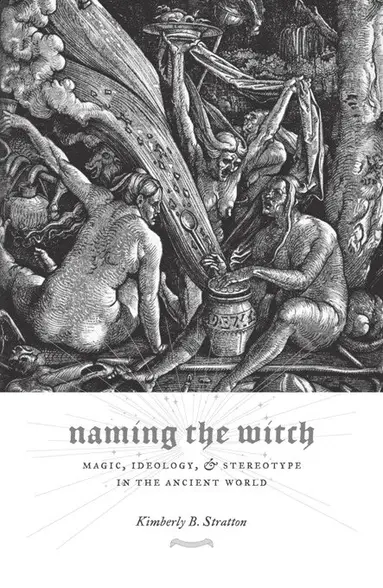
Naming the Witch
- Vikt 0,54 kg
2 227 krhos Bokus · exkl. frakt
672 kr skillnad mellan billigaste och dyraste butik i lager
Dubbelkollat idag
Jämför 2 butiker
- Bokus, 2 227 kr, frakt enligt butiken. Till butik (öppnas i ny flik)
I lagerFrakt: se butikenDubbelkollad 07:51
2 227 kr
Lägst
- Akademibokhandeln, 2 899 kr, frakt enligt butiken. Till butik (öppnas i ny flik)
I lagerFrakt: se butikenDubbelkollad 06:53
2 899 kr

Priser från butikernas flöden kan ha ändrats: det är priset hos butiken som gäller, så kontrollera det innan du handlar.
Prishistorik
Köp nu eller vänta?
Just nu kostar produkten 2 227 kr — 1 618 kr över det lägsta vi sett på 1 månad.
Under den tiden har det oftast legat runt 2 140–2 230 kr.
Pris idag
2 227 kr
- Lägst
- 609 kr
- Snitt
- 2 097 kr
- Högst
- 2 227 kr
| 2026-09-15 | 2 141 kr · Lägst hos Bokus |
|---|---|
| 2026-09-22 | 789 kr · Lägst hos Akademibokhandeln |
| 2026-09-23 | 609 kr · Lägst hos Bokus |
| 2026-09-25 | 2 141 kr · Lägst hos Bokus |
| 2026-10-06 | 2 227 kr · Lägst hos Bokus |
Om produkten
Naming the Witch
Läs merLäs mindre
Kimberly B. Stratton investigates the cultural and ideological motivations behind early imaginings of the magician, the sorceress, and the witch in the ancient world. Accusations of magic could carry the death penalty or, at the very least, marginalize the person or group they targeted. But Stratton moves beyond the popular view of these accusations as mere slander. In her view, representations and accusations of sorcery mirror the complex struggle of ancient societies to define authority, legitimacy, and Otherness. Stratton argues that the concept "magic" first emerged as a discourse in ancient Athens where it operated part and parcel of the struggle to define Greek identity in opposition to the uncivilized "barbarian" following the Persian Wars. The idea of magic then spread throughout the Hellenized world and Rome, reflecting and adapting to political forces, values, and social concerns in each society. Stratton considers the portrayal of witches and magicians in the literature of four related periods and cultures: classical Athens, early imperial Rome, pre-Constantine Christianity, and rabbinic Judaism.She compares patterns in their representations of magic and analyzes the relationship between these stereotypes and the social factors that shaped them. Stratton's comparative approach illuminates the degree to which magic was (and still is) a cultural construct that depended upon and reflected particular social contexts. Unlike most previous studies of magic, which treated the classical world separately from antique Judaism, Naming the Witch highlights the degree to which these ancient cultures shared ideas about power and legitimate authority, even while constructing and deploying those ideas in different ways. The book also interrogates the common association of women with magic, denaturalizing the gendered stereotype in the process. Drawing on Michel Foucault's notion of discourse as well as the work of other contemporary theorists, such as Homi K. Bhabha and Bruce Lincoln, Stratton's bewitching study presents a more nuanced, ideologically sensitive approach to understanding the witch in Western history.
Specifikationer
Fakta
- Vikt
- 0,54 kg
- GTIN
- 09780231138369
Uppgifter från tillverkare och butiker.