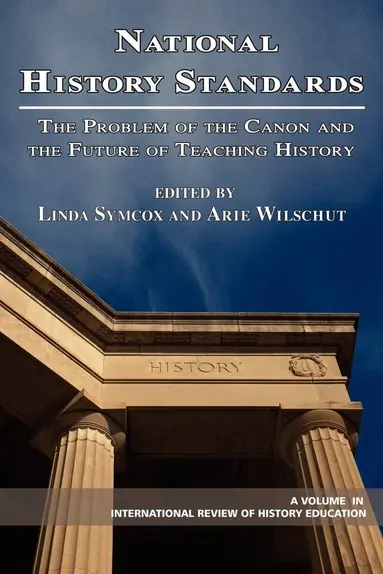
National History Standards
- Vikt 0,47 kg
774 krhos Bokus · exkl. frakt
25 kr skillnad mellan billigaste och dyraste butik i lager
Dubbelkollade priser
Jämför 3 butiker
- Bokus, 774 kr, frakt enligt butiken. Till butik (öppnas i ny flik)
I lagerFrakt: se butikenDubbelkollad 14:51
774 kr
Lägst
- Akademibokhandeln, 799 kr, frakt enligt butiken. Till butik (öppnas i ny flik)
I lagerFrakt: se butikenDubbelkollad 14:53
799 kr
- Adlibris, 774 kr, frakt enligt butiken. Till butik (öppnas i ny flik)
Slut i lagerFrakt: se butikenDubbelkollad 27 okt. 09:10
774 kr


Priser från butikernas flöden kan ha ändrats: det är priset hos butiken som gäller, så kontrollera det innan du handlar.
Prishistorik
Köp nu eller vänta?
Just nu kostar produkten 774 kr — 160 kr över det lägsta vi sett på 1 månad.
Under den tiden har det oftast legat runt 620–770 kr.
Pris idag
774 kr
- Lägst
- 614 kr
- Snitt
- 725 kr
- Högst
- 774 kr
| 2026-09-15 | 774 kr · Lägst hos Bokus |
|---|---|
| 2026-09-25 | 614 kr · Lägst hos Bokus |
| 2026-09-28 | 774 kr · Lägst hos Bokus |
| 2026-10-12 | 617 kr · Lägst hos Bokus |
| 2026-10-16 | 621 kr · Lägst hos Bokus |
| 2026-10-17 | 774 kr · Lägst hos Bokus |
| 2026-10-21 | 618 kr · Lägst hos Bokus |
| 2026-10-24 | 620 kr · Lägst hos Bokus |
| 2026-10-27 | 621 kr · Lägst hos Bokus |
| 2026-10-28 | 774 kr · Lägst hos Bokus |
Om produkten
National History Standards
Läs merLäs mindre
As educators in the United States and Europe develop national history standards for K-12 students, the question of what to do with national history canons is a subject of growing concern. Should national canons still be the foundation for the teaching of history? Do national canons develop citizenship or should they be modified to accommodate the new realities of globalization? Or should they even be discarded outright? These questions become blurred by the debates over preserving national heritages, by so-called 'history wars' or 'culture wars,' and by debates over which pedagogical frameworks to use. These canon and pedagogical debates often overlap, creating even more confusion. A misconceived "skills vs. content" debate often results. Teaching students to think chronologically and historically is not the same as teaching a national heritage or a cosmopolitan outlook. But what exactly is the difference? Policy-makers and opinion leaders often confuse the pedagogical desirability of using a 'framework' for studying history with their own efforts to reaffirm the centrality of national identity rooted in a vision of their nation's history as a way of inculcating citizenship and patriotism. These are the issues discussed in this volume.Today's students are citizens of the world and must be taught to think in global, supranational terms. At the same time, the traditionalists have a point when they argue that the ideal of the nation-state is the cultural glue that has traditionally held society together, and that social cohesion depends on creating and inculcating a common national culture in the schools. From an educational perspective, the problem is how to teach chronological thinking at all. How are we to reconcile the social, political and intellectual realities of a globalizing world with the continuing need for individuals to function locally as citizens of a nation-state, who share a common past, a common culture, and a common political destiny? Is it a duty of history education to create a frame of reference, and if so, what kind of frame of reference should this be? How does frame-of-reference knowledge relate to canonical knowledge and the body of knowledge of history as a whole?
Specifikationer
Fakta
- Vikt
- 0,47 kg
- GTIN
- 09781593116682
Uppgifter från tillverkare och butiker.