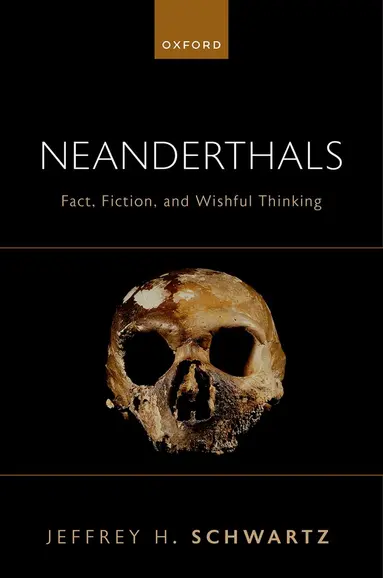
Neanderthals
- Vikt 0,56 kg
Bra pris nuLägsta priset på 1 månad
349 kr365 kr−4% senaste veckanhos Buyersclub · exkl. frakt
Jämfört med det lägsta pris vi sett de 30 dagarna före sänkningen.
130 kr skillnad mellan billigaste och dyraste butik i lager
Dubbelkollade priser
Jämför 5 butiker
- Buyersclub, 349 kr, frakt enligt butiken. Till butik (öppnas i ny flik)
I lagerKampanjFrakt: se butikenDubbelkollad 05:34
349 kr
Lägst
- Bokus, 365 kr, frakt enligt butiken. Till butik (öppnas i ny flik)
I lagerFrakt: se butikenDubbelkollad 05:51
365 kr
- Storytel Books, 399 kr, frakt enligt butiken. Till butik (öppnas i ny flik)
I lagerFrakt: se butikenDubbelkollad 05:00
399 kr
- Akademibokhandeln, 479 kr, frakt enligt butiken. Till butik (öppnas i ny flik)
I lagerFrakt: se butikenDubbelkollad 05:53
479 kr
- Adlibris, 365 kr, frakt enligt butiken. Till butik (öppnas i ny flik)
Slut i lagerFrakt: se butikenDubbelkollad 27 okt. 09:10
365 kr




Priser från butikernas flöden kan ha ändrats: det är priset hos butiken som gäller, så kontrollera det innan du handlar.
Prishistorik
Köp nu eller vänta?
Just nu kostar produkten 349 kr — det lägsta vi sett på 1 månad.
Under den tiden har det oftast legat runt 370–640 kr.
Pris idag
349 kr
- Lägst
- 349 kr
- Snitt
- 500 kr
- Högst
- 662 kr
| 2026-09-15 | 555 kr · Lägst hos Adlibris |
|---|---|
| 2026-09-16 | 638 kr · Lägst hos Adlibris |
| 2026-10-03 | 639 kr · Lägst hos Bokus |
| 2026-10-06 | 662 kr · Lägst hos Bokus |
| 2026-10-08 | 661 kr · Lägst hos Adlibris |
| 2026-10-09 | 365 kr · Lägst hos Adlibris |
| 2026-10-11 | 365 kr · Lägst hos Bokus |
| 2026-10-28 | 349 kr · Lägst hos Buyersclub |
Om produkten
Neanderthals
Läs merLäs mindre
In the early 20th century, paleoanthropologists interpreted the oft-profound differences between specimens of an expanding human fossil record as reflecting taxonomic and evolutionary diversity. Why, then, in the 1940s, did geneticist Theodosius Dobzhansky reconfigure human evolution into one, profoundly morphologically variable lineage which changed slowly through time?Neanderthals: Fact, Fiction, and Wishful Thinking exposes, for the first time, the history of how conceptions of race have configured interpretations of the first-found human fossils; how assumptions underlying human fossils were and still are interpreted as to species and their evolutionary relationships. No matter how "different" Nazis thought living humans were, differences between Neanderthals and bigger-browed, chunkier-faced specimens and living humans trivialized the differences between living humans. In 1950, without basis, taxonomist Ernst Mayr lumped all fossil and extant humans into three transforming species of genus Homo: transvaalensis>erectus>sapiens; sapiens subsumed humans, Neanderthals, and even less morphologically sapiens-like specimens. In 1962, at a Wenner-Gren Foundation meeting, participants-mostly geneticists and behaviorists, unfamiliar with the human fossil record-voted to keep these specimens, Neanderthals, and humans in Homo sapiens. Even when Neanderthals were returned to species neanderthalensis, the assumption remained: humans and Neanderthals interbred. When a Neanderthal nuclear DNA sequence was cobbled together and compared to human nDNA, molecular anthropologists could claim humans received "genes" identified in Neanderthal DNA via interbreeding. In its press release, the Committee that awarded Svante Pääbo the Nobel Prize for "demonstrating" human inheritance of Neanderthal "genes" made clear that his claims were predicated on assuming Neanderthal-human interbreeding. Established perspectives continue to shape how paleoanthropologists and molecular anthropologists interpret human evolution, particularly in relation to Neanderthals. Media coverage often simplifies these interpretations further when presenting them to an interested, but naive, audience. Neanderthals aims to counter this received wisdom.
Specifikationer
Fakta
- Vikt
- 0,56 kg
- GTIN
- 09780197785409
Uppgifter från tillverkare och butiker.