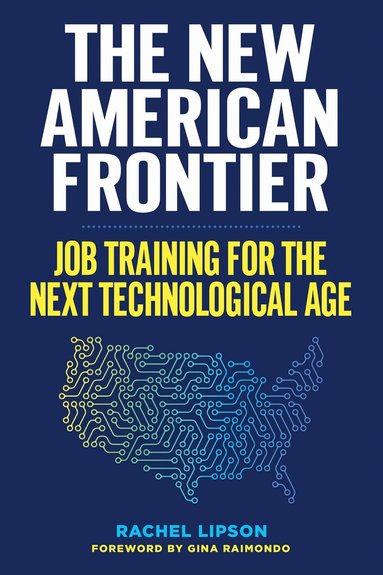
New American Frontier
375 krhos Bokus · exkl. frakt
354 kr skillnad mellan billigaste och dyraste butik i lager
Dubbelkollat idag
Jämför 2 butiker
- Bokus, 375 kr, frakt enligt butiken. Till butik (öppnas i ny flik)
I lagerFrakt: se butikenDubbelkollad 21:51
375 kr
Lägst
- Akademibokhandeln, 729 kr, frakt enligt butiken. Till butik (öppnas i ny flik)
I lagerFrakt: se butikenDubbelkollad 21:53
729 kr

Priser från butikernas flöden kan ha ändrats: det är priset hos butiken som gäller, så kontrollera det innan du handlar.
Prishistorik
Köp nu eller vänta?
Pris idag
375 kr
- Lägst
- 375 kr
- Snitt
- 432 kr
- Högst
- 489 kr
| 2026-10-15 | 489 kr · Lägst hos Akademibokhandeln |
|---|---|
| 2026-10-16 | 375 kr · Lägst hos Bokus |
Om produkten
New American Frontier
Läs merLäs mindre
A forward-looking blueprint for job training in the age of AI, from the front lines of technological changeNew technologies are reshaping the foundations of the US economy, with implications that may ultimately affect nearly every industry. But unlike previous waves of technological changes-when gains mostly accrued to the most educated or most privileged amongst us-this time could be different. In The New American Frontier, Rachel Lipson shows that there is still a real opportunity for good-paying jobs that do not require a four-year degree to build these technologies and maintain them.The book tells this story through seven "frontier" regions where new technologies have landed first. Each chapter offers a clear-eyed look at which jobs have actually materialized, which training programs and policies are working, and where education and workforce systems have struggled to keep pace. From batteries in Michigan to AI data centers in Virginia to small modular nuclear reactors in Idaho, The New American Frontier follows the projects bringing these technologies to life, the next generation of hands-on technical jobs being created, and the educational pathways into these careers.Lipson argues that to make these opportunities real, the country desperately needs renewed attention to community colleges, technical schools, and apprenticeships. She also makes the case for more companies stepping up to help train people, not just hire them. All this means rethinking what we ask of each of educators, employers, and government alike in this next chapter of the American economy. Starting from these places where economic change is already underway, Lipson offers a forward-looking agenda for how our institutions must adapt to support American workers in a new technological era.