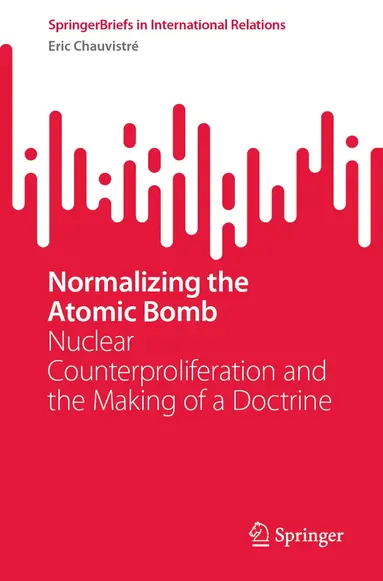
Normalizing the Atomic Bomb
Bra pris nuLägsta priset på 1 månad
546 kr550 kr−0% senaste veckanhos Bokus · exkl. frakt
Jämfört med det lägsta pris vi sett de 30 dagarna före sänkningen.
163 kr skillnad mellan billigaste och dyraste butik i lager
Dubbelkollat idag
Jämför 2 butiker
- Bokus, 546 kr, frakt enligt butiken. Till butik (öppnas i ny flik)
I lagerFrakt: se butikenDubbelkollad 07:51
546 kr
Lägst
- Akademibokhandeln, 709 kr, frakt enligt butiken. Till butik (öppnas i ny flik)
I lagerFrakt: se butikenDubbelkollad 07:53
709 kr

Priser från butikernas flöden kan ha ändrats: det är priset hos butiken som gäller, så kontrollera det innan du handlar.
Prishistorik
Köp nu eller vänta?
Just nu kostar produkten 546 kr — det lägsta vi sett på 1 månad.
Under den tiden har det oftast legat runt 610 kr.
Pris idag
546 kr
- Lägst
- 546 kr
- Snitt
- 597 kr
- Högst
- 621 kr
| 2026-09-15 | 608 kr · Lägst hos Bokus |
|---|---|
| 2026-10-12 | 621 kr · Lägst hos Bokus |
| 2026-10-17 | Ingen butik hade produkten i lager |
| 2026-10-20 | 621 kr · Lägst hos Bokus |
| 2026-10-23 | 552 kr · Lägst hos Bokus |
| 2026-10-24 | 550 kr · Lägst hos Bokus |
| 2026-10-27 | 551 kr · Lägst hos Bokus |
| 2026-11-01 | 546 kr · Lägst hos Bokus |
Om produkten
Normalizing the Atomic Bomb
Läs merLäs mindre
This book contends that a pivotal effort to challenge the presumed uniqueness of the atomic bomb emerged with the United States' adoption of the counterproliferation doctrine in 1993. For the first time, U.S. armed forces were explicitly tasked with preparing for limited wars against nuclear‐armed adversaries-an approach that marked a profound shift in how nuclear weapons were conceptualized.Building on an extensive review of U.S. government documents that defined and shaped the doctrine, the book also draws on interviews conducted shortly after its launch with senior analysts and officials directly involved in its development. Together, these sources offer an unparalleled view into the doctrine's origins, rationale, and internal debates.In addition to tracing the doctrine's evolution, the book situates it within its broader historical moment. It examines the academic and foreign‐policy discussions of the early 1990s that influenced the doctrine's emergence and assesses the extent to which it reshaped strategic thinking inside the Pentagon. The analysis shows that, despite fostering a new mindset, the doctrine ultimately failed to achieve its core promise of improving U.S. military preparedness for limited wars against nuclear‐armed opponents.The book concludes that-even amid dramatic shifts in global power dynamics over the past three decades-early understandings of the atomic bomb as a uniquely devastating and fundamentally undefendable weapon remain compelling. Yet the counterproliferation doctrine left an enduring imprint: by asserting that wars against nuclear‐armed states are winnable and that the effects of nuclear weapons can be contained, it helped normalize the atomic bomb in U.S. strategic thought.