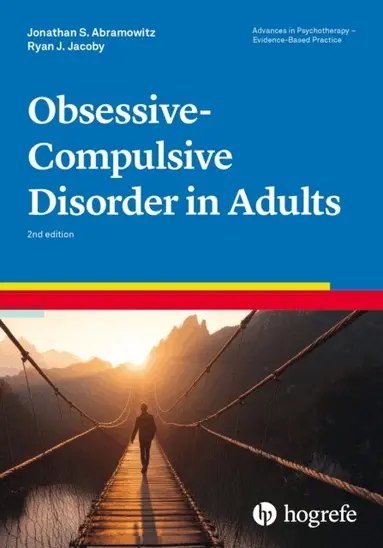
Obsessive-Compulsive Disorder in Adults
Dubbelkollade priser
Jämför 2 butiker
- Bokus, 328 kr, frakt enligt butiken. Till butik (öppnas i ny flik)
I lagerFrakt: se butikenDubbelkollad 07:51
328 kr
Lägst
- Adlibris, 351 kr, frakt enligt butiken. Till butik (öppnas i ny flik)
Slut i lagerFrakt: se butikenDubbelkollad 27 okt. 09:10
351 kr


Priser från butikernas flöden kan ha ändrats: det är priset hos butiken som gäller, så kontrollera det innan du handlar.
Prishistorik
Köp nu eller vänta?
Just nu kostar produkten 328 kr — 148 kr över det lägsta vi sett på 1 månad.
Under den tiden har det oftast legat runt 180–330 kr.
Pris idag
328 kr
- Lägst
- 180 kr
- Snitt
- 262 kr
- Högst
- 351 kr
| 2026-09-15 | 246 kr · Lägst hos Adlibris |
|---|---|
| 2026-09-28 | 180 kr · Lägst hos Bokus |
| 2026-10-06 | 184 kr · Lägst hos Bokus |
| 2026-10-12 | 289 kr · Lägst hos Bokus |
| 2026-10-15 | 328 kr · Lägst hos Bokus |
| 2026-10-21 | 351 kr · Lägst hos Bokus |
| 2026-10-26 | 328 kr · Lägst hos Bokus |
Om produkten
Obsessive-Compulsive Disorder in Adults
Läs merLäs mindre
An updated edition of the popular guide to successfully assessing and treating adults with OCD- Compact and current overview of science and practice- Details the best treatment approaches- Includes downloadable tools for clinical useThe new edition of this concise and popular guide delivers up-to-date, hands-on guidance on the assessment and treatment of obsessive-compulsive disorder (OCD), offering a framework for understanding and helping people with this complex and challenging condition. Written by leading experts in the field, this book unpacks the intricacies of diagnosing OCD and explores models that explain the onset, development, and persistence of the disorder as well as its various manifestations.Using case studies and examples throughout, the authors detail the most evidence-based therapeutic approaches, emphasizing two techniques that have proven most effective in clinical practice: exposure and response prevention. Methods such as optimizing inhibitory learning, using acceptance and commitment therapy, and techniques for working with couples and families affected by OCD are also integrated to address the disorder''s core symptoms and collateral effects. Further sections explore multicultural issues, less common forms of OCD (e.g., relationship obsessions), and in-person vs. virtual treatment. Printable tools and worksheets in the appendices provide invaluable resources allowing for immediate use in practice.This is essential reading for clinical psychologists, therapists, psychiatrists, counselors, and students engaged in treating OCD.