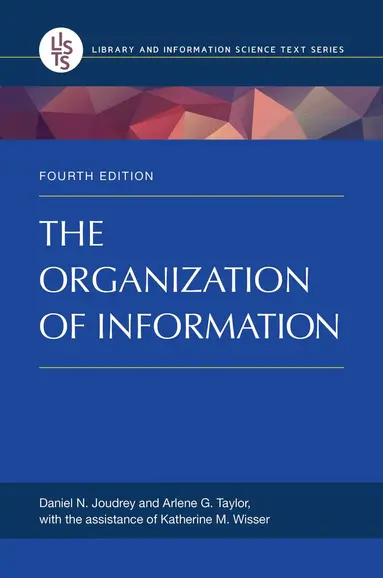
Organization of Information
- Vikt 1,63 kg
749 krhos Akademibokhandeln · exkl. frakt
51 kr skillnad mellan billigaste och dyraste butik i lager
Dubbelkollade priser
Jämför 3 butiker
- Akademibokhandeln, 749 kr, frakt enligt butiken. Till butik (öppnas i ny flik)
I lagerFrakt: se butikenDubbelkollad 11:18
749 kr
Lägst
- Bokus, 800 kr, frakt enligt butiken. Till butik (öppnas i ny flik)
I lagerFrakt: se butikenDubbelkollad 10:51
800 kr
- Adlibris, 659 kr, frakt enligt butiken. Till butik (öppnas i ny flik)
Slut i lagerFrakt: se butikenDubbelkollad 27 okt. 09:10
659 kr


Priser från butikernas flöden kan ha ändrats: det är priset hos butiken som gäller, så kontrollera det innan du handlar.
Prishistorik
Köp nu eller vänta?
Just nu kostar produkten 749 kr — 90 kr över det lägsta vi sett på 1 månad.
Pris idag
749 kr
- Lägst
- 659 kr
- Snitt
- 706 kr
- Högst
- 749 kr
| 2026-09-15 | 659 kr · Lägst hos Adlibris |
|---|---|
| 2026-10-08 | 749 kr · Lägst hos Akademibokhandeln |
Om produkten
Organization of Information
Läs merLäs mindre
This fourth edition provides an updated look at information organization, featuring coverage of the Semantic Web, linked data, and EAC-CPF; new metadata models such as IFLA-LRM and RiC; and new perspectives on RDA and its implementation.This latest edition of The Organization of Information is a key resource for anyone in the beginning stages of their LIS career as well as longstanding professionals and paraprofessionals seeking accurate, clear, and up-to-date guidance on information organization activities across the discipline. The book begins with a historical look at information organization methods, covering libraries, archives, museums, and online settings. It then addresses the types of retrieval tools used throughout the discipline-catalogs, finding aids, indexes, bibliographies, and search engines-before describing the functionality of systems, explaining the basic principles of system design, and defining how they affect information organization. The principles and functionality of metadata is next, with coverage of the types, functions, tools, and models (particularly FRBR, IFLA-LRM, RDF) and how encoding works for use and sharing-for example, MARC, XML schemas, and linked data approaches.The latter portion of the resource describes specific activities related to the creation of metadata for resources. These chapters offer an overview of the major issues, challenges, and standards used in the information professions, addressing topics such as resource description (including standards found in RDA, DACS, and CCO), access points, authority control, subject analysis, controlled vocabularies-notably LCSH, MeSH, Sears, and AAT-and categorization systems such as DDC and LCC.
Specifikationer
Fakta
- Vikt
- 1,63 kg
- GTIN
- 09781598848588
Uppgifter från tillverkare och butiker.