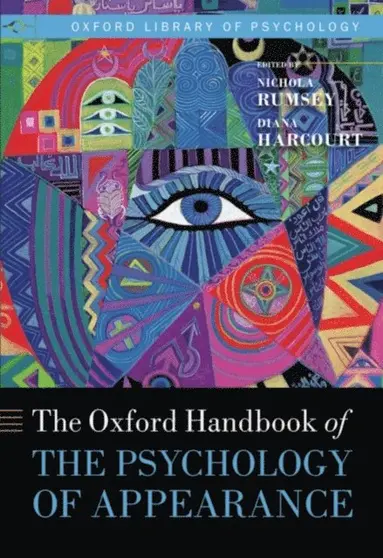
Oxford Handbook of the Psychology of Appearance
Dubbelkollat idag
Jämför 1 butik
- Bokus, 888 kr, frakt enligt butiken. Till butik (öppnas i ny flik)
I lagerFrakt: se butikenDubbelkollad 02:51
888 kr
Lägst

Priser från butikernas flöden kan ha ändrats: det är priset hos butiken som gäller, så kontrollera det innan du handlar.
Prishistorik
Köp nu eller vänta?
Just nu kostar produkten 888 kr — 316 kr över det lägsta vi sett på 1 månad.
Under den tiden har det oftast legat runt 570–890 kr.
Pris idag
888 kr
- Lägst
- 572 kr
- Snitt
- 795 kr
- Högst
- 888 kr
| 2026-09-15 | 868 kr · Lägst hos Bokus |
|---|---|
| 2026-09-29 | 572 kr · Lägst hos Bokus |
| 2026-10-11 | 584 kr · Lägst hos Bokus |
| 2026-10-12 | 888 kr · Lägst hos Bokus |
Om produkten
Oxford Handbook of the Psychology of Appearance
Läs merLäs mindre
We live in a society in which messages associating physical attractiveness with success and happiness are pervasive. There is an epidemic of appearance concerns amongst teenagers and adults in westernised countries and body image dissatisfaction is now considered normative. Large numbers of people experience negative impacts on wellbeing and, for many adolescents, adults, and even children, appearance concerns are influential in choices about a range of health behaviours. The challenges facing them include difficulties with social encounters and the problem of having to cope with negative self perceptions. The Oxford Handbook of the Psychology of Appearance is a comprehensive reference text written by experts in the field. It examines how people feel about the way they look, and why it is that some people are happy with their appearance whilst increasing numbers are troubled by the way they look - reporting that these appearance-related concerns affect many aspects of their lives including relationships, health and well-being. It considers the influence of other people and how the media affects thoughts and behaviours related to appearance. It explores the experiences of people living with a disfigurement in a society that seems to be increasingly focussed on appearance and the pursuit of an idealised image of beauty, size and weight. Exploring a topic that has been often neglected in the psychological literature, this book will be invaluable for health, clinical, and social psychologists, health professionals working with patients with visible differences, and those in the field of public health and education.