Pachamama Politics
- Vikt 0 kg
385 krhos Bokus · exkl. frakt
114 kr skillnad mellan billigaste och dyraste butik i lager
Dubbelkollat idag
Jämför 2 butiker
- Bokus, 385 kr, frakt enligt butiken. Till butik (öppnas i ny flik)
I lagerFrakt: se butikenDubbelkollad 02:51
385 kr
Lägst
- Akademibokhandeln, 499 kr, frakt enligt butiken. Till butik (öppnas i ny flik)
I lagerFrakt: se butikenDubbelkollad 01:53
499 kr

Priser från butikernas flöden kan ha ändrats: det är priset hos butiken som gäller, så kontrollera det innan du handlar.
Prishistorik
Köp nu eller vänta?
Pris idag
385 kr
- Lägst
- 384 kr
- Snitt
- 396 kr
- Högst
- 499 kr
| 2026-10-08 | 499 kr · Lägst hos Akademibokhandeln |
|---|---|
| 2026-10-09 | 386 kr · Lägst hos Bokus |
| 2026-10-11 | 385 kr · Lägst hos Bokus |
| 2026-10-12 | 384 kr · Lägst hos Bokus |
| 2026-10-16 | 385 kr · Lägst hos Bokus |
Om produkten
Pachamama Politics
Läs merLäs mindre
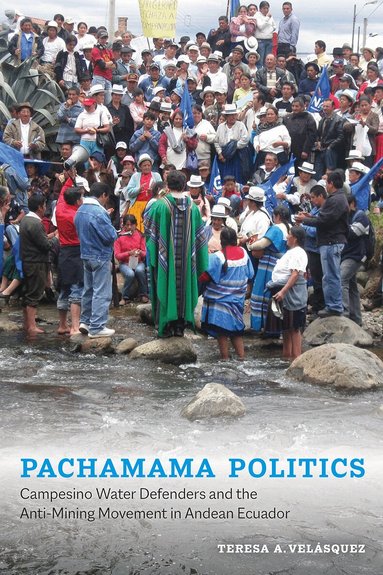
Ecuador became the first country in the world to grant the Pachamama, or Mother Earth, constitutional rights in 2008. This landmark achievement represented a shift to incorporate Indigenous philosophies of Sumak Kawsay or Buen Vivir (to live well) as a framework for social and political change. The extraordinary move coincided with the rise of neoextractivism, where the self-described socialist President Rafael Correa contended that Buen Vivir could be achieved through controversial mining projects on Indigenous and campesino territories, including their watersheds. Pachamama Politics provides a rich ethnographic account of the tensions that follow from neoextractivism in the southern Ecuadorian Andes, where campesinos mobilized to defend their community-managed watershed from a proposed gold mine. Positioned as an activist-scholar, Teresa A. Velásquez takes the reader inside the movement-alongside marches, road blockades, and river and high-altitude wetlands-to expose the rifts between social movements and the "pink tide" government. When the promise of social change turns to state criminalization of water defenders, Velásquez argues that the contradictions of neoextractivism created the political conditions for campesinos to reconsider their relationship to indigeneity. The book takes an intersectional approach to the study of anti-mining struggles and explains how campesino communities and their allies identified with and redeployed Indigenous cosmologies to defend their water as a life-sustaining entity. Pachamama Politics shows why progressive change requires a shift away from the extractive model of national development to a plurinational defense of community water systems and Indigenous peoples and their autonomy.
Specifikationer
Fakta
- Vikt
- 0 kg
- GTIN
- 09780816556557
Uppgifter från tillverkare och butiker.