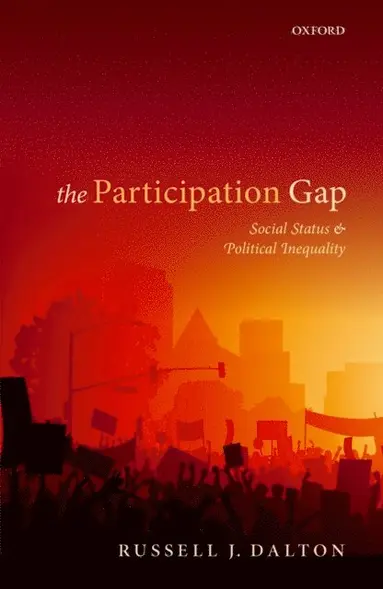
Participation Gap
Dubbelkollat idag
Jämför 1 butik
- Bokus, 522 kr, frakt enligt butiken. Till butik (öppnas i ny flik)
I lagerFrakt: se butikenDubbelkollad 02:51
522 kr
Lägst

Priser från butikernas flöden kan ha ändrats: det är priset hos butiken som gäller, så kontrollera det innan du handlar.
Prishistorik
Köp nu eller vänta?
Just nu kostar produkten 522 kr — 48 kr över det lägsta vi sett på 1 månad.
Under den tiden har det oftast legat runt 520–560 kr.
Pris idag
522 kr
- Lägst
- 474 kr
- Snitt
- 532 kr
- Högst
- 562 kr
| 2026-09-15 | 474 kr · Lägst hos Bokus |
|---|---|
| 2026-09-18 | 479 kr · Lägst hos Bokus |
| 2026-09-19 | 527 kr · Lägst hos Bokus |
| 2026-09-28 | 479 kr · Lägst hos Bokus |
| 2026-09-30 | 527 kr · Lägst hos Bokus |
| 2026-10-06 | 562 kr · Lägst hos Bokus |
| 2026-10-10 | 522 kr · Lägst hos Bokus |
| 2026-10-13 | 562 kr · Lägst hos Bokus |
| 2026-10-26 | 522 kr · Lägst hos Bokus |
Om produkten
The dilemma of democracy arises from two contrasting trends
Läs merLäs mindre
More people in the established democracies are participating in civil society activity, contacting government officials, protesting, and using online activism and other creative forms of participation. At the same time, the importance of social status as an influence on political activity is increasing. The democratic principle of the equality of voice is eroding. The politically rich are getting richer-and the politically needy have less voice.This book assembles an unprecedented set of international public opinion surveys to identify the individual, institutional, and political factors that produce these trends. New forms of activity place greater demands on participants, raising the importance of social status skills and resources. Civil society activity further widens the participation gap. New norms of citizenship shift how people participate. And generational change and new online forms of activism accentuate this process. Effective and representative government requires a participatory citizenry and equal voice, and participation trends are undermining these outcomes. The Participation Gap both documents the growing participation gap in contemporary democracies and suggests ways that we can better achieve their theoretical ideal of a participatory citizenry and equal voice.