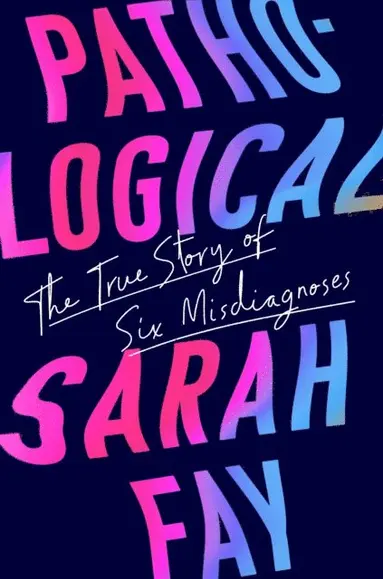
Pathological
Dubbelkollat idag
Jämför 1 butik
- Bokus, 159 kr, frakt enligt butiken. Till butik (öppnas i ny flik)
I lagerFrakt: se butikenDubbelkollad 01:51
159 kr
Lägst

Priser från butikernas flöden kan ha ändrats: det är priset hos butiken som gäller, så kontrollera det innan du handlar.
Prishistorik
Köp nu eller vänta?
Just nu kostar produkten 159 kr — 4 kr över det lägsta vi sett på 1 månad.
Pris idag
159 kr
- Lägst
- 155 kr
- Snitt
- 157 kr
- Högst
- 159 kr
| 2026-09-15 | 155 kr · Lägst hos Bokus |
|---|---|
| 2026-10-12 | 159 kr · Lägst hos Bokus |
Om produkten
Pathological
Läs merLäs mindre
In this stunning debut-both a beautiful memoir and a brilliant work of investigative journalism that joins that ranks of works by Mary Karr, Leslie Jamison, and Kay Redfield Jamison-the former editor of The Paris Review explores the ways we pathologize human experiences, and offers a searing critique of the handbook of modern psychiatry, the Diagnostic and Statistical Manual of Mental Disorders (the DSM), revealing how it is based largely in fiction.Over the course of twenty-five years, doctors diagnosed Sarah Fay with six different conditions-anorexia, major depressive disorder (MDD), anxiety disorder, attention deficit hyperactivity disorder (ADHD), obsessive-compulsive disorder (OCD), and bipolar disorder. Pathological is the gripping story of the factors that led to those diagnoses, and the impact each had on her life. But it is also a rigorously researched investigation into the Diagnostic and Statistical Manual of Mental Disorders (DSM)-psychiatry's "bible," the manual from which all mental illness diagnoses come. Yet as Sarah found out, this revered standard is fiction. Fay contemplates what it means to live with mental illness and what it has meant for her life, and for many others in similar circumstances. So many people have been misdiagnosed and over-diagnosed with multiple (sometimes competing) conditions, causing massive confusion, immense anguish, and unnecessary suffering. As Fay learned, with knowledge comes the ability to understand what invented terms like "clinical depression" or "anxiety disorder" or "bipolar disorder" or any other DSM diagnosis really means. In telling her story, Sarah uses a surprising literary device, a fresh and entertaining survey of the rules and history of punctuation, to illuminate how, like pathology, punctuation orders and categorizes, and tries to make sense of what's otherwise disordered.